
Our Mission
Industrial Water Chillers for Process and HVAC Cooling
GESON designs water-chilling systems for industrial processes and commercial chilled-water applications. A reliable selection starts with the required heat load and operating conditions—not a nominal tonnage alone. The proposed cooling capacity, input power and efficiency must be stated at the specified entering and leaving fluid temperatures, flow rate, ambient or condenser-water condition, and fluid type.
Available configurations may include air-cooled or water-cooled heat rejection and scroll or screw compressor platforms. Exact availability, refrigerant, materials, controls and operating envelope are confirmed for the selected model and destination requirements.
Air-Cooled vs Water-Cooled Water Chillers
| Selection factor | Air-cooled chiller | Water-cooled chiller |
|---|---|---|
| Heat rejection | Condenser coils and fans reject heat to outdoor air | Condenser water transfers heat to an external heat-rejection system, commonly a cooling tower |
| Site requirements | Requires adequate outdoor airflow, clearance and ambient-temperature evaluation | Requires condenser-water pumps, water treatment and suitable heat-rejection equipment |
| Water use | No cooling-tower evaporation for the condenser | An open cooling tower normally consumes water through evaporation, drift and blowdown |
| Energy comparison | Evaluate chiller compressors and condenser fans | Evaluate the complete plant, including chiller, condenser pumps and tower fans |
| Maintenance focus | Coil cleanliness, fan condition, airflow and refrigerant circuit | Tube condition, water quality, scale control, pumps and tower maintenance |
Water-cooled equipment can offer favorable chiller efficiency in suitable applications, while air-cooled equipment can simplify installation and avoid cooling-tower water use. The correct decision depends on climate, operating hours, water availability, utility prices, noise limits, maintenance capability and total installed cost.
Performance Data Required for an Accurate Selection
| Project input | Engineering purpose |
|---|---|
| Application and process | Defines load behavior, contamination risk, uptime and redundancy requirements |
| Required cooling load | Must include process heat, pump heat, piping gains and a justified design allowance |
| Entering and leaving fluid temperatures | Set the evaporating condition, approach temperature and freeze margin |
| Fluid flow and allowable pressure drop | Determine heat transfer, pump selection and evaporator operating limits |
| Fluid or glycol concentration | Changes heat capacity, viscosity, pressure drop and available cooling capacity |
| Design ambient or condenser-water temperatures | Determine heat-rejection duty and compressor lift |
| Load profile and minimum load | Support compressor staging, turndown and part-load efficiency evaluation |
| Power supply and destination country | Define electrical configuration and destination-specific requirements |
How to Compare Chiller Efficiency
Compare full-load capacity and efficiency only at matching rating conditions. For variable-load projects, also compare IPLV or a project-specific NPLV when the applicable rating method covers the proposed equipment. AHRI 550/590 and 551/591 provide standardized performance-rating methods for eligible factory-made vapor-compression water-chilling packages. Glycol and other non-water fluids require manufacturer performance selections at the actual concentration and temperatures.
A high COP claim without chilled-fluid temperatures, heat-rejection conditions, flow and included auxiliary power is not sufficient for procurement. For a water-cooled plant, evaluate chiller power together with condenser-water pumps and cooling-tower fans. For an air-cooled unit, include condenser-fan power and performance at the site’s design ambient temperature.
Request a Water Chiller Selection
Send GESON engineers your application, required cooling load, entering and leaving temperatures, flow, ambient temperature, fluid and glycol concentration, power supply and destination country. The proposal can then identify the applicable configuration, documented performance at stated conditions, installation requirements and commercial scope.
Water Chiller FAQ
What information is needed to size an industrial water chiller?
Provide the application, heat load, entering and leaving fluid temperatures, flow, fluid type and glycol concentration, design ambient or condenser-water temperatures, power supply and destination. A nominal tonnage without these conditions is not enough for an accurate selection.
Should I choose an air-cooled or water-cooled chiller?
Choose after comparing climate, water availability, operating hours, noise, installation space, maintenance resources and whole-system energy. Water-cooled plants include pumps and heat-rejection equipment; air-cooled units require suitable outdoor airflow and ambient capability.
Can COP values be compared directly?
Only when capacity and input power are stated at the same chilled-fluid, flow and heat-rejection conditions and use the same equipment boundary. Part-load metrics must also follow the same rating method.
Can a water chiller operate with glycol?
Yes, when the selected model is engineered for the required glycol type, concentration and temperature. Glycol changes heat capacity, viscosity, pressure drop and available capacity, so the manufacturer must provide a corrected selection.
Technical References
Main Products
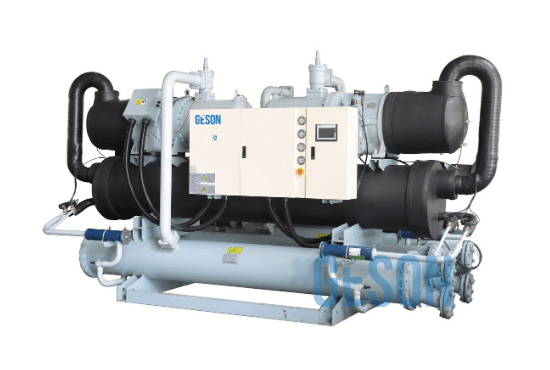
- Cooling capacity is selected for the stated operating conditions and confirmed in the model-specific proposal
- Capacity control and minimum stable load are confirmed for the selected compressor and control configuration.
- Completely running tested before the delivery from the factory.
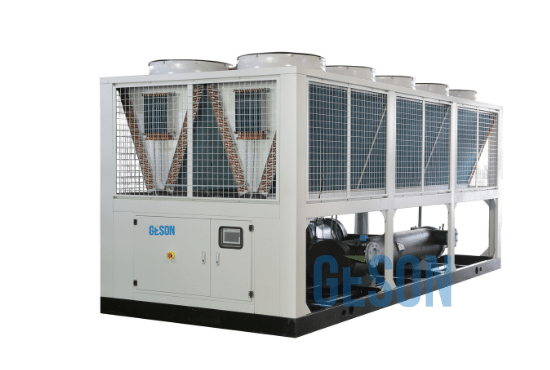
- Chilled water temperature 5~25℃
- Refrigerant is confirmed by model, operating conditions and destination requirements. New R454B and R513A chiller selections are available subject to model and project review.
- Compact in structure, cover small area, save machine room space.
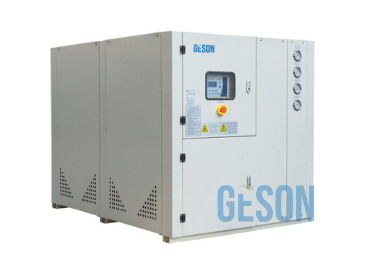
- Cooling capacity ranges: 10HP~80HP
- Built-in a water tank and water tank
- Easy for maintenance and service.
- The scroll compressor is long-life operating and easy to maintain.
Advantages of Geson Chiller
We want to be your expert chiller manufacturer in China
| Water-cooled Screw Chiller 12/7℃ | ||||
| No. | Item | Unit | 180kw | |
| 1 | Rated Cooling Capacity | KW | 180 | |
| 3 | Condenser | Condenser | Shell and tube type | |
| Condenser import and outlet diameter | DN | DN80 | ||
| Cooling water flow | m³/H | 39 | ||
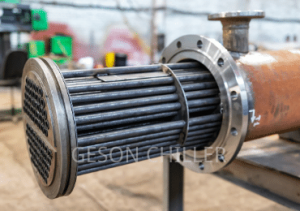
| 4 | Evaporator | Evaporator | Shell and tube type | |
| Evaporator import and outlet diameter | DN | DN80 | ||
| 55% Glycol Water Flow | m³/H | 32 | ||
| 5 | Refrigerant | Confirm for selected model and destination | ||
| 6 | Power specification | 3P-380V-50HZ | ||
| 7 | Protection device | Phase lack protection, phase reversion protection, overload current protection, exhaust temperature protection, low&high pressure protection, low temerature protection. | ||
| 8 | Size | Length mm | MM | 2450 |
| Width mm | MM | 900 | ||
| Height mm | MM | 1580 | ||
| 9 | Weight | KG | 1270 | |
| 10 | Operating weight | KG | 1420 | |
All Types of Industrial Water Chiller Products
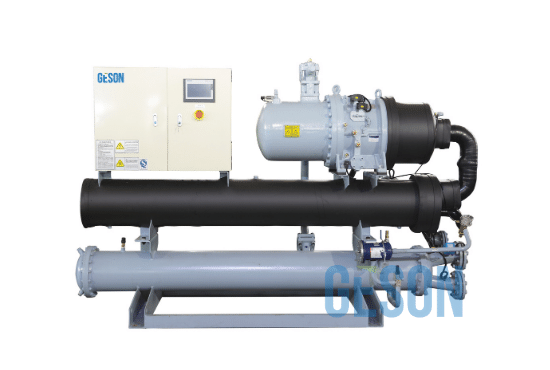
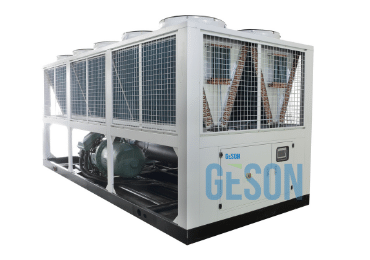
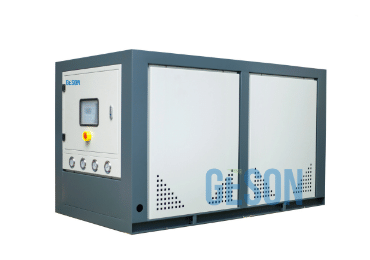
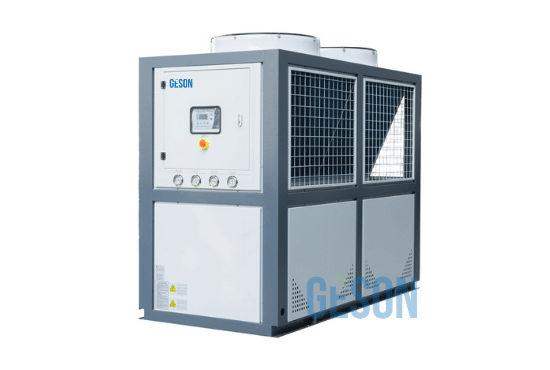
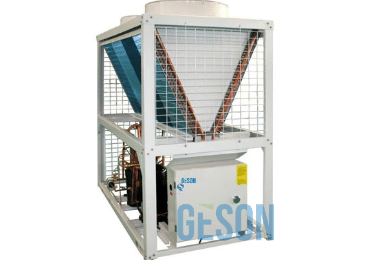
Modular Air Chiller
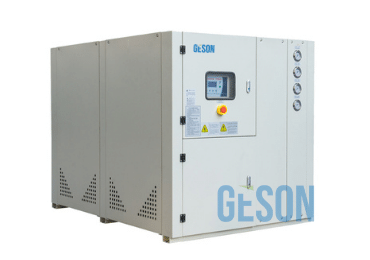
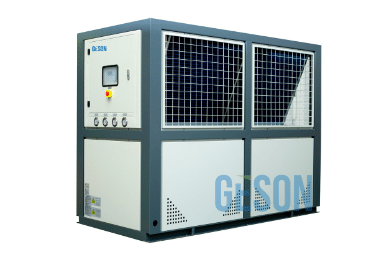
Air Source Heat Pump
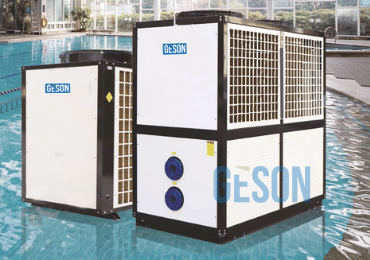
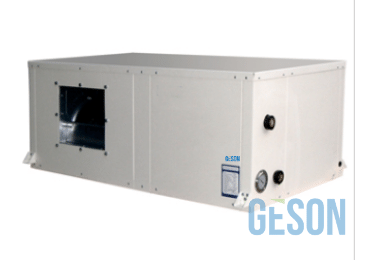
Water Source Heat Pump
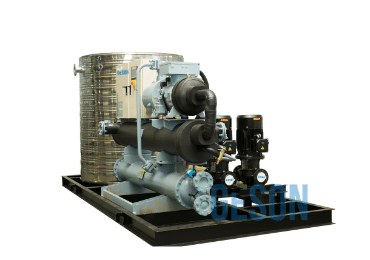
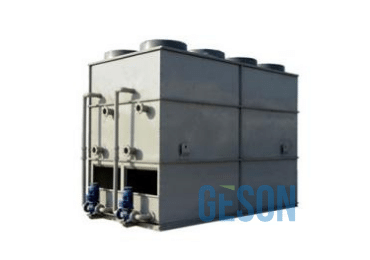
Water Cooling Tower
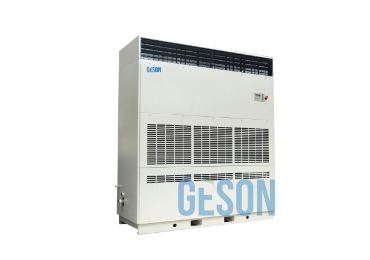
Air Coditioning Chiller
Your Top Quality Chillers Manufacturer In China
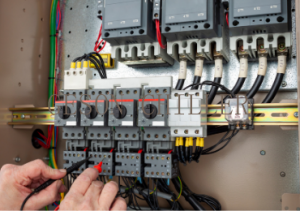
Top Brand Components
Ensure Your Top Quality Chiller
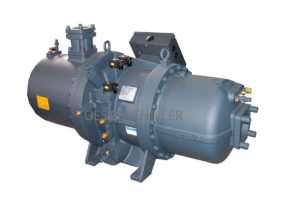
Top Quality Screw Compressor With Certificate
Compressor efficiency is evaluated as part of the complete chiller selection at stated full-load and part-load conditions;
Refrigerant availability is confirmed by model, application and destination requirements.
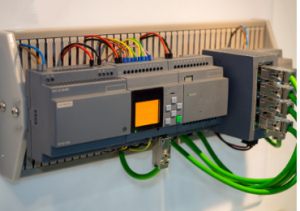
LCD Touch Controller
Automatic Detection of Cold Water Outlet Temperature;
Automatic Detection of Operating Conditions;
Automatically Record the Alarm and Send Trouble Alarm;
Can Realize Remote Control;
Reserve RS-485 Communication Interface, or Ethernet Port;
Customize Display Language: Chinese, English, Russian, Spanish;
Service life depends on operating conditions, water quality, maintenance and duty cycle;
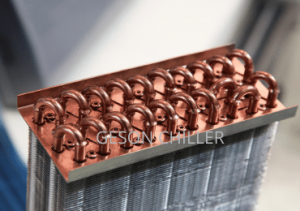
Applications
Chiller For Plastic Industrial

Beer And Wine Fermentation Chiller

Chemical Processing Chiller

Computer Data Center Chiller

Food And Dairy Chiller

Hotel HVAC Chiller

MRI And Laser Chiller

Pharmaceutical-Formulation-chiller
Swimming-Pool-chiller
Water Chiller Air-cooled and Water Cooled Chiller Manufacturer | Ultimate Guide
Water chillers are devices that lower water’s temperature, and it has many uses in an industrial, commercial, and residential setup.
Many water chillers use refrigerants. To initiate the exchange of heat from the water to the atmosphere or the location where heat transfer takes place.
Geson is one of the best water chiller manufacturers in the world, making them the name to trust when it comes to heating or cooling applications.
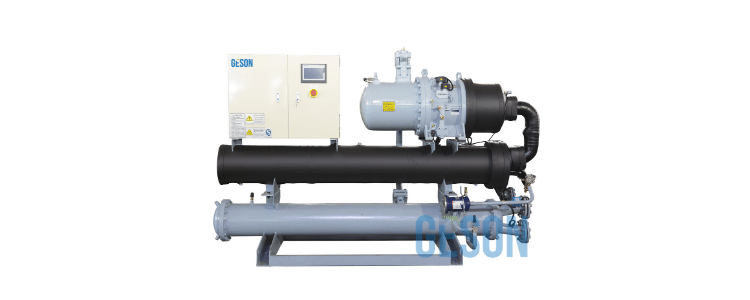
Water Chiller
How Does a Water Chiller Work?
Water chillers follow the principles of vapor compression and absorption.
In a vapor-compression water chiller, refrigerant evaporates at low pressure and absorbs heat from the circulating process fluid through the evaporator.
As the refrigerant circulates through the different components of the water chiller, heat transfer takes place.
To further understand how a water chiller works, check out this water cooled chiller diagram.
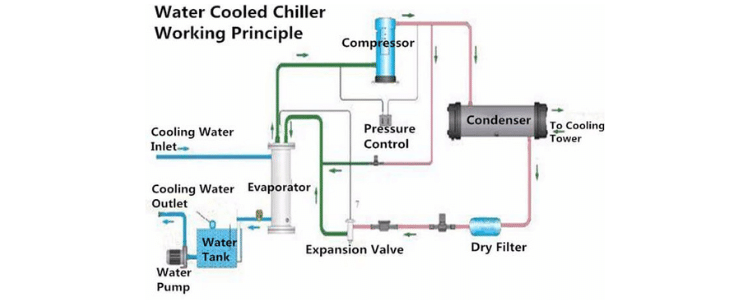
Water cooled chiller diagram
The Technical Parameters Of The Chiller?
The chiller operating parameters are:
- Refrigeration operating conditions.
The refrigeration system running under different working conditions will produce different working effects.
- Cooling capacity.
Refers to the full cooling capacity output of the chiller operating under standard conditions.
It is the main technical indicator, it can measure the chiller cooling capacity.
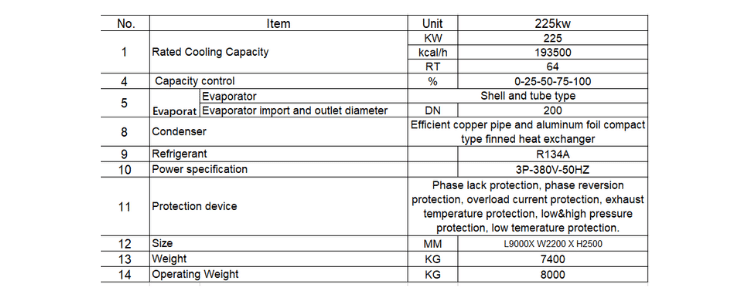
Chiller Specification Sheet
- Refrigeration working fluid and charge amount.
The refrigerant is also called refrigerant.
Refrigerant selection depends on the equipment design, temperature range, safety classification and destination rules. GESON can review new R454B and R513A chiller requirements and support legacy GESON R22 equipment subject to model, parts and service-scope confirmation.
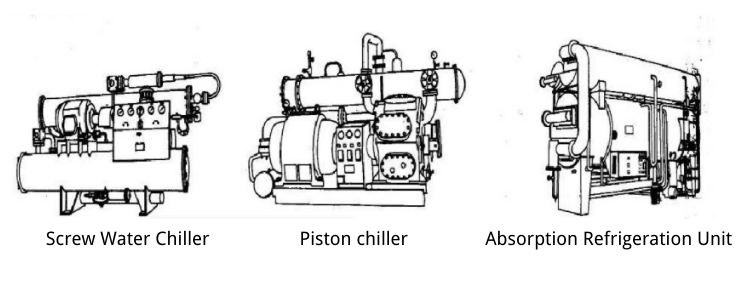
Screw Water Chiller, Piston chiller, Absorption Refrigeration Unit
- Cooling capacity adjustment range.
Refers to the ability of the chiller to adjust the output of the chiller.
The cooling capacity adjustment range is a percentage of rated cooling capacity under the standard push condition.
Stepless adjustment is expressed as the effective adjustment range.
- Unit input power.
The input power of a compression refrigeration unit refers to the power of the compressor motor.
The input power of the absorption refrigeration unit is the sum of the motor power of the various pumps in the machine.
- Chilled water flow rate and cooling water flow rate.
Refers to the flow of chilled water and cooling water flowing through the chiller under standard operating conditions.
- Loss of water pressure head.
Refers to the resistance of chilled water flowing through the chiller evaporator.
And the resistance of cooling water flowing through the condenser of the chiller.
- Take over size.
Refers to the pipe diameter of the chilled water system and the connecting pipe between the cooling water system and the chiller.
- Dimensions and weight.
The external dimensions of the chiller refer to the length x width x height of the unit.
Weight generally refers to its operating weight.
- noise.
Refers to the amount of noise produced by the chiller during stable operation under standard operating conditions.
Generally expressed by La sound level or N(NR) evaluation curve.
Different models of chillers have different technical parameters.
What is a Water Chiller Used for?
Water chillers are devices that can lower water’s temperature.
Most of them use a refrigerant that follows a closed-loop system.
Such a system facilitates the exchange of heat from the water and into the atmosphere.
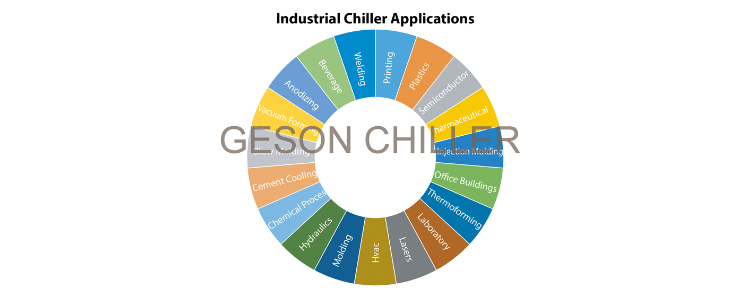
Industrial Water Chiller Application
What is the Difference between an Air Conditioner and a Water Chiller?
Both air conditioners and water chillers have the capacity to lower temperature.
The pivotal difference between them is how they work, such as the use of water to water chiller and air to air chiller.
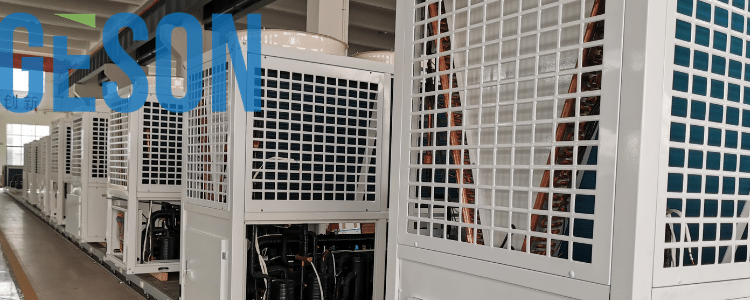
Air Cooled Chiller
What are the Types of Water Chillers?
The two most common types of water chillers are water cooled chiller and air cooled chiller.
Air cooled water chiller work with the use of fans, forcing air towards the condenser tubes.
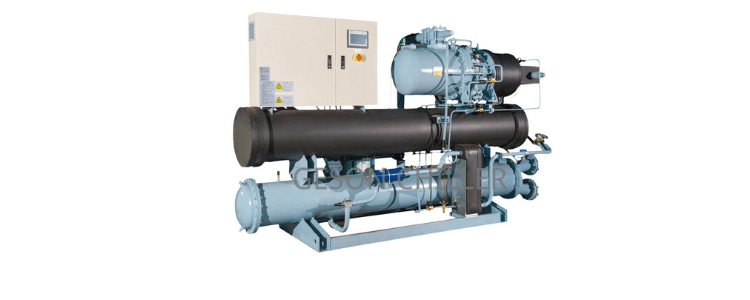
Industrial Water Chiller
Water chillers, on the other hand, work by pumping water towards the condenser, then transferring it towards the cooling tower.
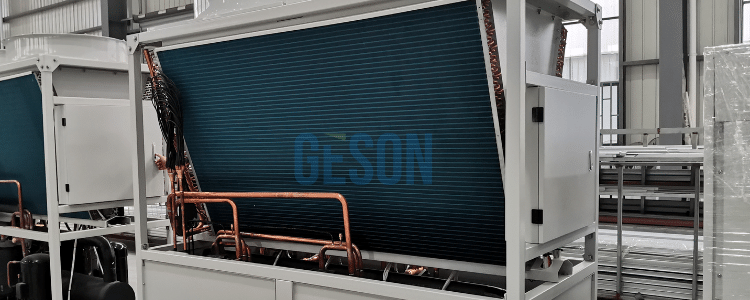
Air Scroll Type Chiller
What are the Components of a Water Chiller?
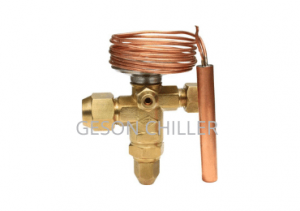
The main components of a water chiller are the compressor, condenser, expansion valve, evaporator, power unit, controls, and water boxes.
Each of these components serves a major role in the systemic function of the water cooler.
Without one or the other, the water chiller won’t work.
Which Gas is Used in a Water Chiller?
Water chillers used in an industrial setup use different types of refrigerants, such as R-410A, R-134a, R-404A, and R-407C.
However, some of these gasses don’t work on scroll compressors.
To make sure that you’re getting the right refrigerant for your water chiller, please check the manufacturer’s guide.
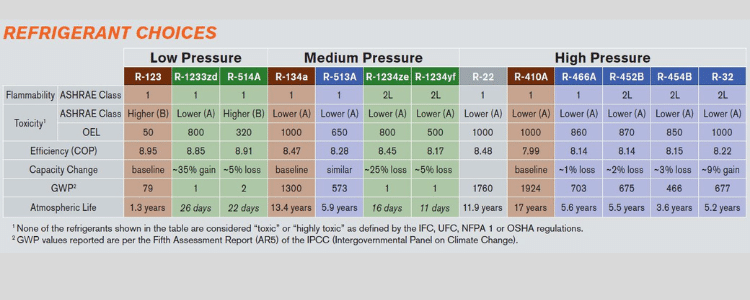
Refrigerant Is Used In a Water Cooled Chiller System
Where are Water Chillers Used?
Water chiller systems are devices that cool machinery, products, and spaces.
In a manufacturing setup, water chillers have many uses in die-cutting and injection molding.
They have applications in different industries such as food and beverage, semiconductors, and machine tool production.
What is the Role of Water Chillers in an HVAC System?
Water chillers are refrigeration devices that produce water that is chilled at approximately 7 degrees Celsius.
Its primary function is to reduce water temperature until it creates a cooling effect.
Water chillers can be a part of a bigger network of heating and cooling system made possible through HVAC integration.
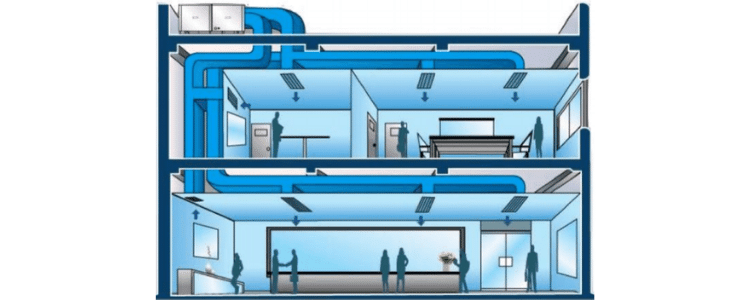
HVAC Chiller
Why Do You Install Water Chillers in a Building?
Water chillers can provide cooling to one or more buildings when it works as a centralized cooling system.
Water chiller systems absorb heat from the spaces inside the building and then transfer it to the atmosphere through refrigeration.
This principle works on both residential and commercial buildings.
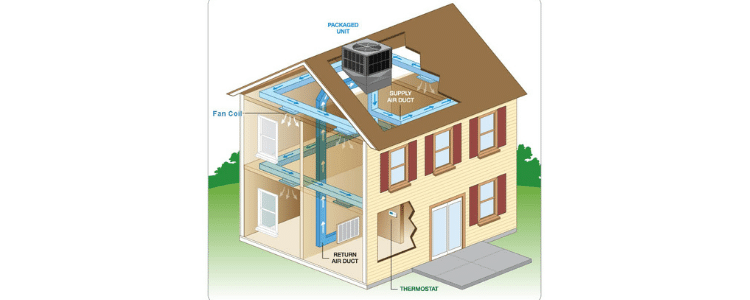
Chiller system for home
How do Absorption Chillers Work?
Absorption chillers cool water by initiating an abrupt change in pressure by heating up the water inside the generator.
This causes the air pressure to go up.
As water becomes vapor, it passes through a pipe that goes to the evaporator.
What is the Refrigerant in an Absorption Chiller?
A common water–lithium bromide absorption cycle uses water as the refrigerant and lithium bromide solution as the absorbent.
Absorption equipment requires a heat source and a design-specific operating analysis.
The refrigerant boils under the vacuum allowing the chiller to work as designed.
What Type of Compressor is Most Often Used in Large Water Chillers?
Most water cooled chillers use recirculating condenser water coming from cooling towers to process the refrigerant.
However, there are some other vapor compression chillers that may use other compressors, such as scroll and centrifugal compressors.
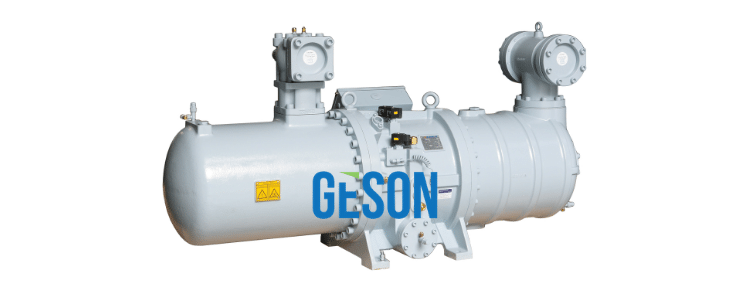
screw compressor
To know what type of compressor your water chiller uses, please check the manual.

Scroll Compressor
What is the Function of a Compressor in a Water Chiller?
Compressors are vital parts of a water chiller, and its job is to transfer heat from indoor spaces.
As the water chiller processes the refrigerant, it absorbs heat.
The next step is to release heat to make way for cooler air.
What is a Screw-Type Water Chiller?
Screw-type water chillers have screw compressors, and they may either be water-cooled or air-cooled chillers.
Compressor location depends on the packaged-chiller design and is not determined solely by condenser type.
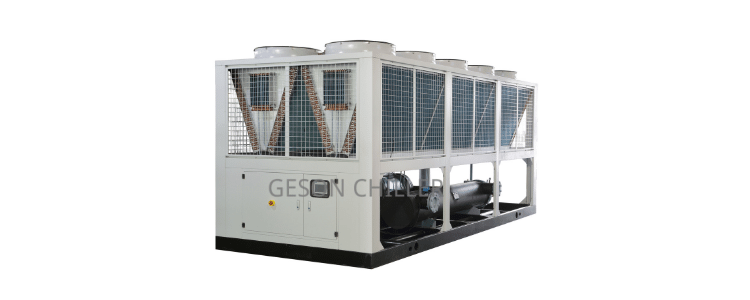
Screw Chiller
What is a Scroll-Type Water Chiller?
Scroll-type chillers work with the purpose of humidifying, dehumidifying, or cooling the air.
Many scroll-type chillers work in the same way as air conditioners.
Scroll chillers may either be water-cooled or air-cooled, and they’re mostly self-contained.
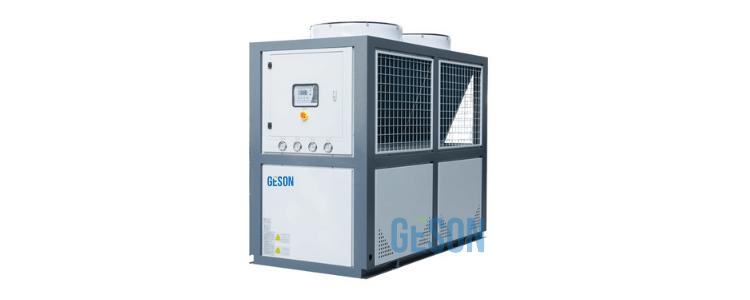
Scroll chiller package unit
What Type of Water-Cooled Condenser is Used in Large Chillers?
Water-cooled chillers use a water-cooled condenser connected to an external heat-rejection system.
They may also have a cooling tower to facilitate the process.
What Types of Prime Movers can be Used for Centrifugal Chillers?
Centrifugal chillers use different types of prime movers, such as AC and DC motors.
They may also use variable frequency drive power sources such as gas or steam turbines and diesel or gas engines.
The main function of a centrifugal compressor is speed regulation.
Why is it Important to Keep an Operating Log on a Water Chiller?
It is important to keep an operating log for chillers because it will ensure that your equipment runs efficiently and smoothly.
Water chillers will develop problems over time.
Technicians will easily solve most of those issues if there’s a log of the system’s parameters.
Is a Chiller also a Condenser?
Chillers and condensers are not the same.
Water-cooled chillers use a recirculating condenser to function.
Condensers are just a part of a water chiller unit for it to work as intended.
Why are Water-Cooled chillers More Efficient than Air-Cooled Chillers?
The main reason water-cooled chillers are more efficient than air-cooled chillers would be the cooling tower.
It is because cooling towers work in accordance with the ambient bulb temperature.
What is the Best Chiller Efficiency?
Water chillers achieve maximum cooling efficiency when it is running at 70 to 75 percent load.
If it requires the lowest ECWT or entering condenser water temperature at this point, then you are using the water chiller at its most optimal state.
How do I Choose a Water Chiller?
To choose the right water chiller based on your needs, the first step is to determine your heat load requirements.
Next, know what coolant type, flow rate, and temperature settings you require.
The other considerations include the installation environment, performance curves, and pump performance.
How Do You Find the Best Water Chiller?
You’ll find the best water chiller once you defined the main purpose it serves.
There are different kinds of machines used as water chiller hydroponics these days.
You should also determine the cooling capacity that you require prior to buying a hydroponic water chiller.

water chiller system hydroponics
Should You Buy the Cheapest Water Chiller?
There is no point in buying the cheapest water chiller if you are compromising quality.
When buying a water chiller, be sure that you consider all factors.
Determine beforehand the actual use of the chiller and what functions you require from it.
How to Cool the Aquarium in Summer?
Excessive water temperature in summer can easily cause ornamental fish diseases。
And if the water temperature is too high, the water quality is also prone to deterioration.
So once you find that the temperature of the fish tank is too high.
You need to find a way to cool the fish tank.
Using a water chiller aquarium, if the water temperature has been around 37 degrees, using a chiller is the best way. Scientific, direct, effective and stable.
Do You Need to Add Air to Water Chiller?
Air-cooled and water-cooled water chillers have two different structures.
Air-cooled chillers require air to function while water-cooled chillers need water instead of air.
That is the reason why it is possible to install water-cooled chillers indoors.
What is it Important to Have a Cold Water Chiller?
Cooling water is the type of water used to transfer heat from one part of the chiller system.
As the refrigerant cools the water, it becomes chilled water, and it may now transfer from one component to the next and allow the water chiller to work as designed.
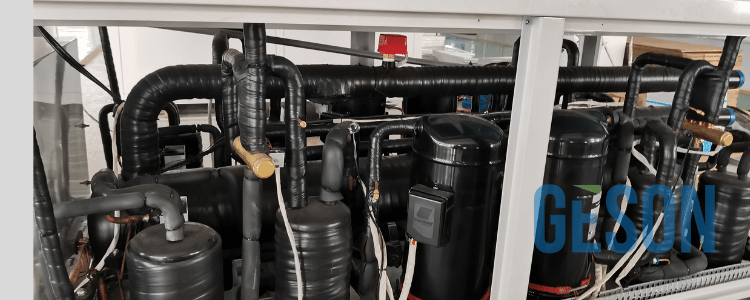
Process Chillers Manufacturers
What are the Capacities of a Water Chiller?
Water chillers may come in various capacities, but the most common ones are the 1 ton water chiller, 2 ton water chiller, 3 ton water chiller, and 5 ton water chiller.
However, if you need a larger capacity water chiller, it is possible to have a 10 ton water chiller customized for you.
What are the Specifications of a Water Chiller?
Water chillers may come in various structures and specifications. For example, there is a 12v water chiller and a 1000 litre water chiller running on a 10-kW power.
Manufacturers may build these machines according to your specifications.
When buying water chillers, be sure to define your heat load, temperature stability, and ambient temperature requirements.
What is the Best Water Chiller for Hydroponics?
If you’re looking for the best water chiller for hydroponics, then it’s important that you go for a globally trusted brand.
Make sure that it has a large refrigeration capacity as well as an anti-corrosive evaporator system.
Other good features to consider are a digital display, slim profile, removable air filter, easy installation, and seamless operation.
What is the Ideal Water Chiller for Aquariums?
If you need an aquarium water chiller, then you must make sure that you’re getting the right size for your tank.
A 40-gallon aquarium requires a 1/15 HP inline water chiller while a 340-gallon aquarium needs a 1/3 HP inline water chiller.
Be sure to check out the reviews of your preferred device to ensure that you’re getting the best buy for your water chiller aquarium.
What is an Industrial Water Chiller?
An industrial water chiller sees several applications in cooling products, machines, and mechanisms.
Their main function is to remove heat from the water and transfer it to the air.
The goal is to cool below the ambient temperature to meet the requirements of the water chiller plant.
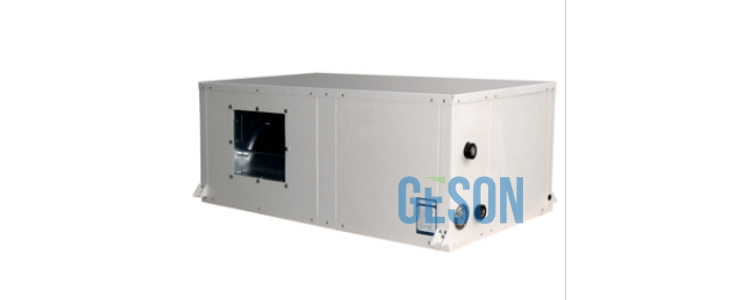
Small chiller unit
Where Do You Find a Quality Water Chiller for Sale?
There are different water chiller manufacturers in the world, and one of the best is Geson.
Geson has dozens of experts who proficiently build and design water chillers according to the client’s requirements.
If you are looking for an affordable water chiller 1000 liter price, look for the Geson trademark.
What is the Use of a Portable Water Chiller?
A portable water chiller is a trimmed-down version of an industrial water chiller.
This small water chiller generally works the same way, which is to absorb heat from the water and transfers heat away from water using the evaporator.
Many people use portable water chillers in residential and commercial setups.
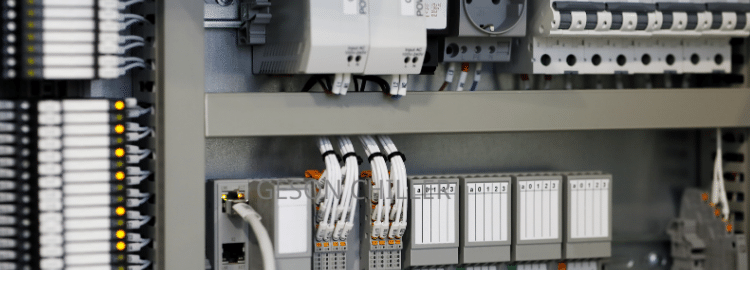
Programmable Logic Controller PLC Based Control
Where Do You Use a Mini Water Chiller?
People mostly use a mini water chiller in their bathrooms and showers.
In tropical places where cold water is a luxury, a mini water chiller will work best.
Mini water chillers are easy to install and use, which will ensure cold water coming out of the shower at all times.
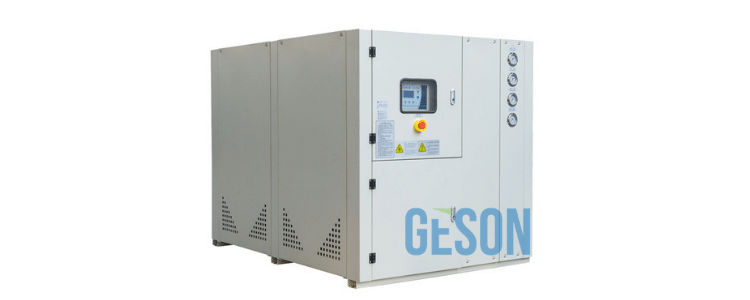
Mini Water Chiller
Features of GESON water units
The large refrigeration capacity adopts double compressors.
Adjusted steplessly, has excellent partial load performance.
Electronic expansion valve.
Matching various working conditions and efficient operation
Efficient oil separation, ejection auxiliary oil return, more reliable operation
Industry-leading touch screen controller, easy to operate
Integrated design, easy installation
Environmentally friendly refrigerant, no damage to the ozone layer.
Chiller Installation Procedure for water-cooled chiller units
On the installation site.
When the chiller unit arrived.
Please carefully inspected, and all items should be checked.
According to the chiller installation checklist.
If the chiller unit is damaged and missing parts.
Or damage caused during transportation,
Please notice GESON CHILLER.
The user needs to provide a rigid foundation or concrete base.
The base should be not deform.
The foundation size, please refers to the four positioning holes sizes.
The foundation should have sufficient strength.
Can support the water cooled chiller running weight during operation.
When running chiller in the chiller equipment room,
Should take measures to remove the heat from the chiller.
Because the chiller will generate heat when it running.
The ventilation can maintain the room temperature below 45°C.
There should be no less than 1.5 meters of space at the front, back,
There should be no less than 1.5 meters of space at the left, and right of the chiller unit.
The vertical distance required above the chiller unit is 1 meter.
There should be no pipes and lines above the compressor for maintenance.
Drainage:
Near the chiller, adequate drainage capacity measures should be provided.
When stop or repair the system, the water can be drained easily.
Handling tools:
For the water cooled chiller installation.
Hoisting equipment, hoisting beams, hoisting chains, jacks, sliding skids, pad rollers, skid rods.
Please note that you should refer to the chiller installation guide from GESON CHILLER.
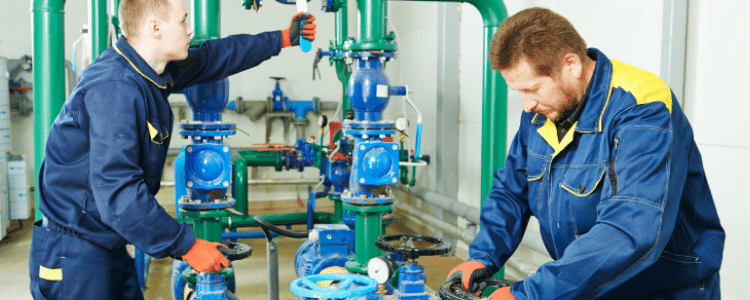
Chiller Installation Procedure
How Do You Maintain a Water Cooled Chiller?
To ensure that your water-cooler chiller works optimally, keep a daily log for it.
You should also have a technician come over regularly to clean its tubes, treat the condenser water, lower the entering water temperature, maintain the flow rate, and ensure adequate refrigerant charge.
The technician should also prevent inefficiencies in its operation and check the compressor oil.
Water Cooled Chiller Unit Supplier in China
A water chiller is a type of liquid cooling device that is designed for industrial purposes. As the name implies, it processes cold water that is responsible for cooling different types of industrial equipment.
A water chiller is not just a unit itself but rather a full system. It is made of different components that make it a complete refrigeration system. Among its parts are the condensers, pipes, cooling pumps, cooling reservoirs, and more.
When the liquid is processed through the water chiller, it is able to achieve a certain temperature. Once it has reached the ideal water temperature, the liquid is pumped into a circuit so that it can provide cooling for industrial equipment.
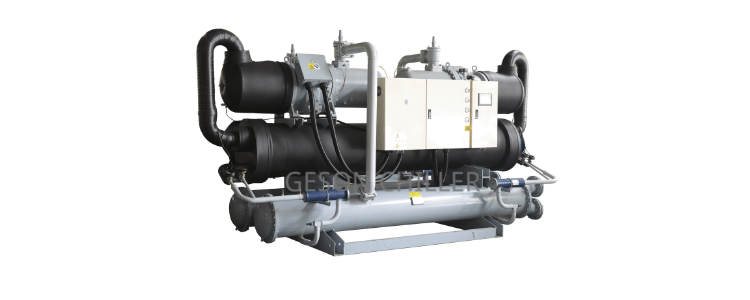
Commercial Water Chiller
The water chiller is one of the most simplified systems out there. This is part of the reason why it is popular in numerous industrial applications. The consistency of the water flow and the hydraulic-based circuit ensures there is ade[Truncated]