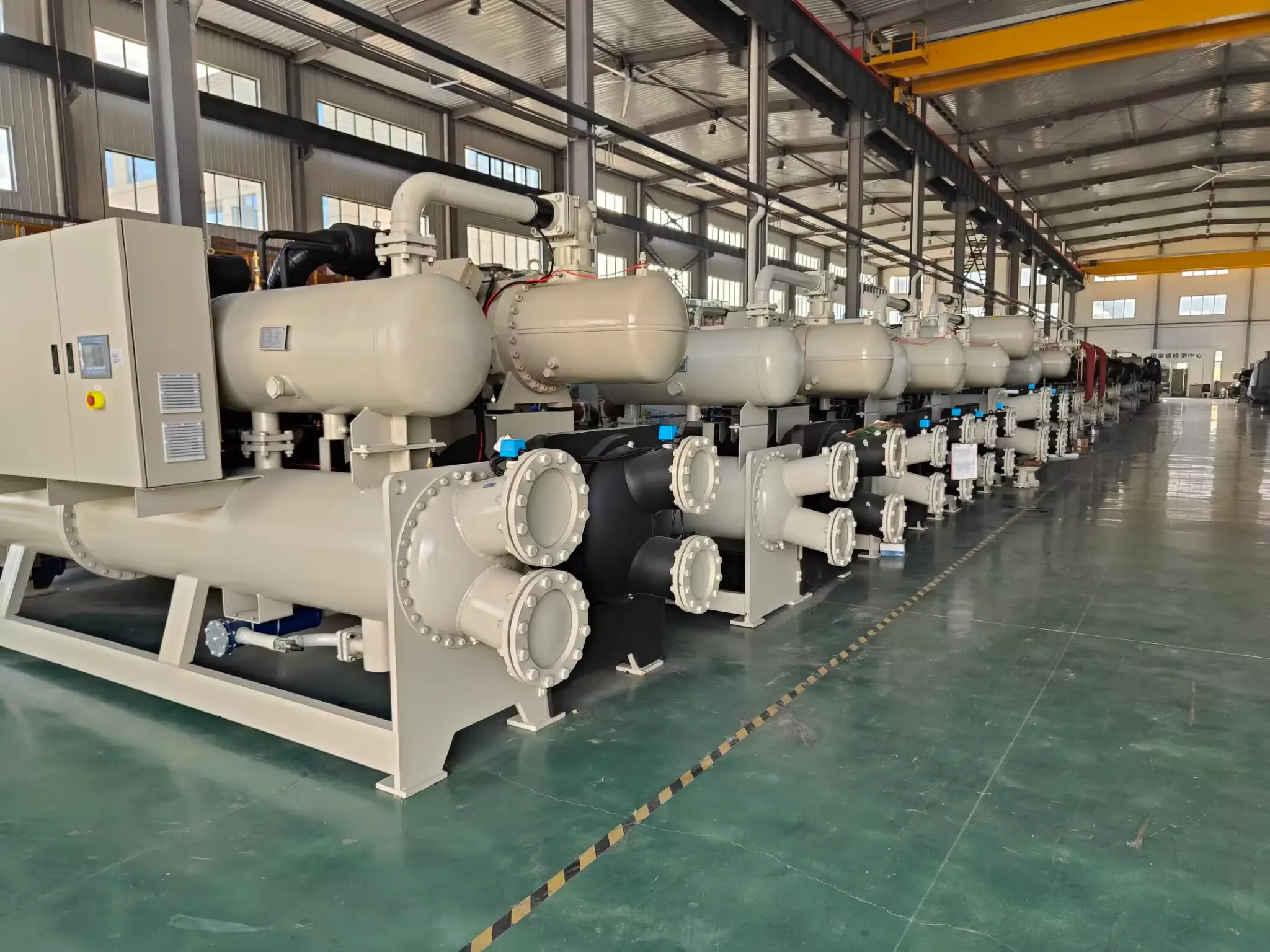
WATER COOLED CHILLER MANUFACTURER

Water Cooled Chiller Manufacturer

A water cooled chiller transfers process or building heat to a condenser-water circuit, which normally rejects that heat through a cooling tower or another engineered heat sink. Correct selection requires the complete operating point—not a nominal tonnage alone. Chilled-fluid temperatures and flow, condenser-water temperatures and flow, fluid properties, fouling allowance, load profile and electrical supply all affect capacity, input power and COP.

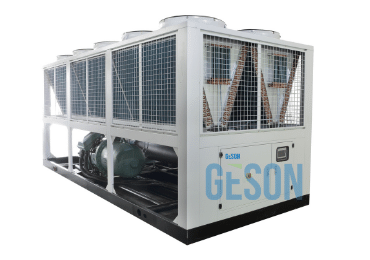
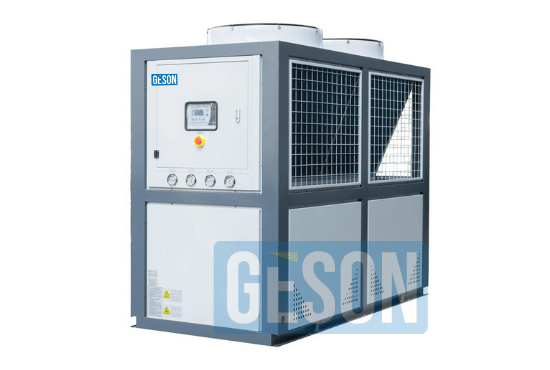
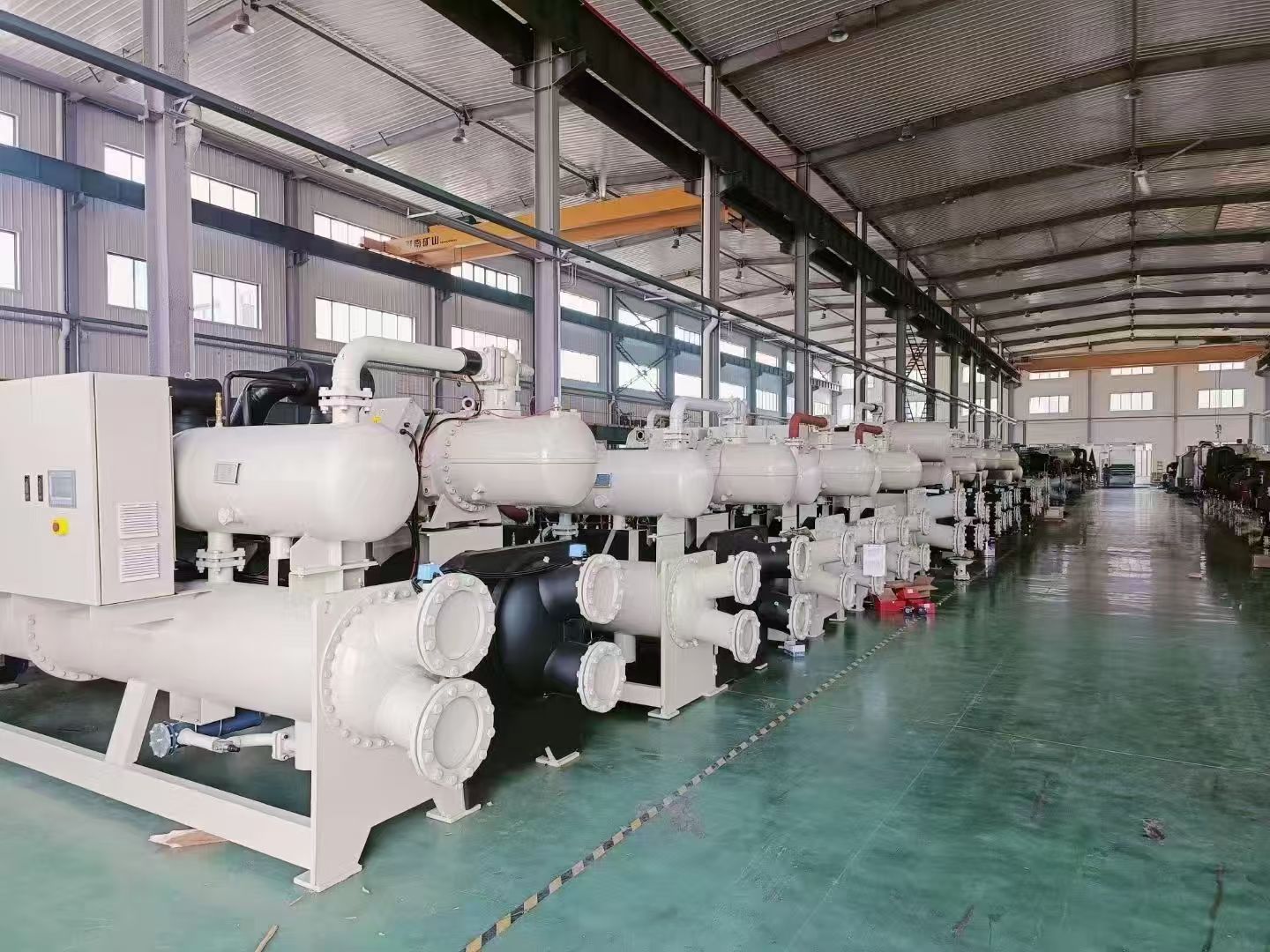
GESON supplies engineered water cooled chiller packages for industrial process cooling and HVAC projects. Scroll or screw compressor configurations are selected from the required duty and operating profile. Model-specific capacity, efficiency, materials, refrigerant, compressor arrangement and operating limits are confirmed in the written selection.

Request Chiller Selection

Data Required for Water Cooled Chiller Selection

Provide the following project data before comparing prices or nominal capacity. If the cooling load is unknown, send the process heat input, material mass, batch time and required pull-down time so the duty can be calculated.

Selection input Information to provide Why it matters
Application and load Process, equipment, required net cooling load and operating hours Defines duty, staging and redundancy
Chilled-fluid temperatures Entering and leaving temperatures Defines evaporator duty and compressor lift
Chilled-fluid flow Design flow and allowable pressure drop Supports heat-balance and pump selection
Fluid Water or secondary fluid; glycol type and concentration Changes heat transfer, viscosity, pressure drop and freeze protection
Condenser water Entering and leaving temperatures, flow and water quality Defines heat-rejection condition and condenser selection
Site condition Design wet bulb, maximum ambient, altitude and indoor/outdoor location Affects tower and equipment design
Electrical supply Voltage, phase and frequency Defines motors, controls and electrical components
Project requirements Destination country, applicable code, installation constraints and required documentation Defines project and certificate scope

Scroll vs Screw Water Cooled Chillers

Decision point Scroll configuration Screw configuration
Typical selection logic Modular compressors can suit smaller duties or staged capacity control Often evaluated for larger or continuous process loads
Part-load control Compressor staging Compressor unloading or variable-speed control when specified
Redundancy Multiple refrigerant circuits or compressor stages may be specified Multiple compressors or circuits may be evaluated for critical duty
Engineering review Final choice depends on load profile, chilled-fluid temperature, condenser-water condition, efficiency target, maintenance plan and project budget.

Compressor type alone does not determine system efficiency. Compare net cooling capacity, compressor input, water-side pressure drop and part-load performance at the same published rating conditions. Confirm whether quoted COP includes only the refrigeration package or also includes chilled-water pumps, condenser-water pumps and cooling-tower fans.

Rated Capacity, Power and COP

Cooling capacity, input power and COP must be stated at a defined operating point. A nominal refrigeration-ton value cannot be treated as guaranteed site capacity when the leaving-fluid temperature, entering-fluid temperature, flow, condenser-water temperature or glycol concentration changes.

  • Net cooling capacity: confirm the capacity available to the process at the stated chilled-fluid and condenser-water conditions.
  • Input power: identify whether the figure covers compressors only or also pumps, fans, heaters and controls.
  • COP: compare units only at identical rating conditions and with identical equipment boundaries.
  • Part-load performance: review the expected load profile instead of relying only on a full-load point.
  • Pressure drop: use evaporator and condenser pressure-drop data when selecting pumps.

GESON provides model-specific performance data with the written quotation after the design conditions are agreed. Universal capacity, power or COP claims are not used as substitutes for a project selection.

Condenser-Water and Cooling-Tower Requirements

The condenser-water circuit carries both the evaporator load and compressor heat to the heat-rejection equipment. The cooling tower or alternative heat sink must therefore be selected for total heat rejection, not only nominal chiller capacity. Required inputs include design wet-bulb temperature, tower approach and range, condenser-water flow, water quality and the approved minimum and maximum condenser-water temperatures.

Water treatment, filtration, bleed control and tube or passage cleaning are part of reliable operation. Actual requirements depend on local water chemistry, materials and the selected heat exchanger. Pump head must cover piping, valves, condenser pressure drop and the heat-rejection equipment at design flow.

Process Fluids, Glycol and Low-Temperature Duty

Water is common for above-freezing duty. Propylene glycol, ethylene glycol or another approved secondary fluid may be required for freeze protection or low-temperature process service. The exact fluid and concentration must be declared because they change specific heat, density, viscosity, heat-transfer performance and pump pressure drop.

Low leaving-fluid temperature does not define a standard chiller by itself. Selection must also include return temperature, flow, glycol concentration, ambient or condenser-water condition, pull-down requirement and operating profile. GESON confirms the achievable temperature range and capacity for the selected model in writing.

Refrigerant and Project Scope

GESON can supply new chillers using R454B or R513A where the selected equipment, destination requirements and written project scope permit. Refrigerant choice affects safety classification, components, controls, installation and service procedures. It is confirmed for the exact model rather than promised as a universal option.

GESON can also provide parts or refrigerant-related service for legacy GESON R22 equipment. This does not mean that R22 is specified for new equipment or that a refrigerant conversion is automatically approved. The original unit, local rules, component compatibility and service scope must be reviewed first.

Construction, Controls and Reliability Review

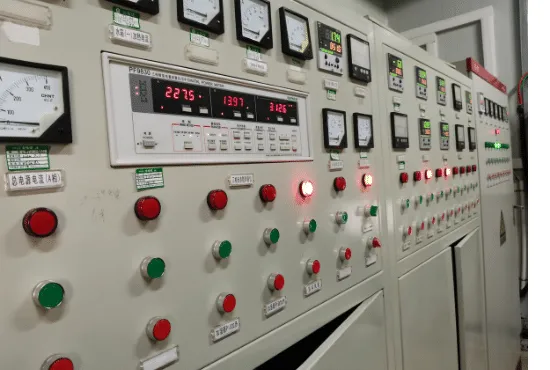
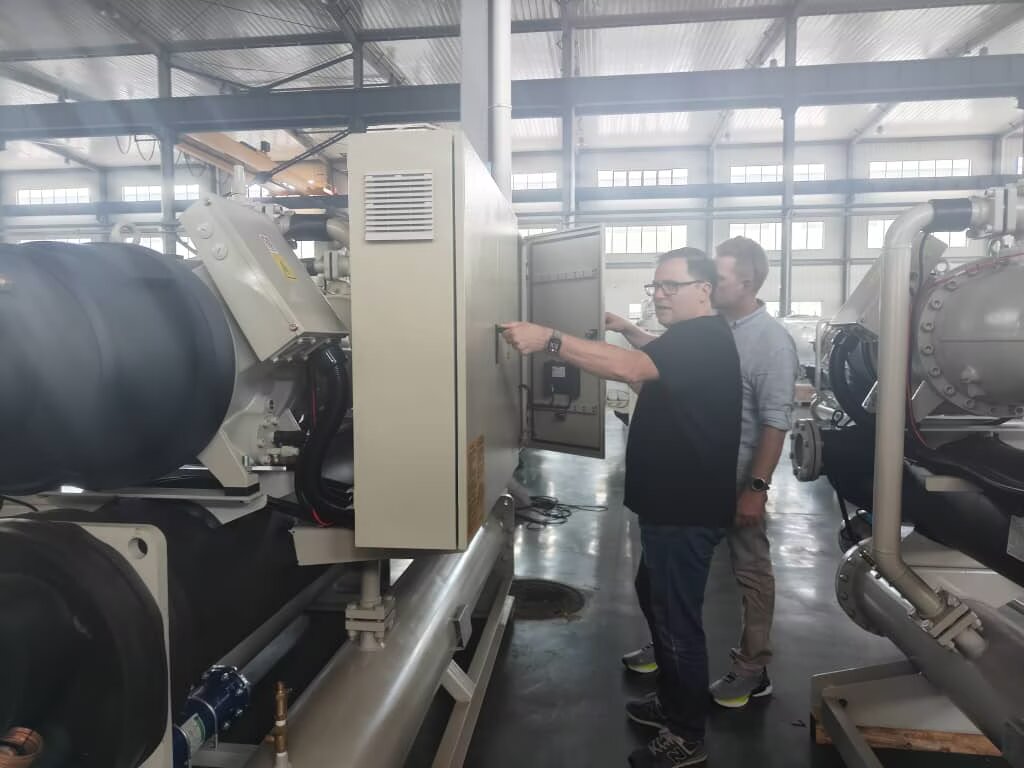
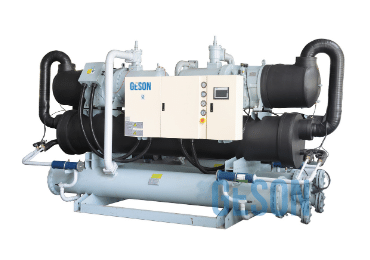
The written submittal should identify compressor configuration, evaporator and condenser type, wetted materials, refrigerant circuits, controls, electrical supply, design pressure, protection devices and connection requirements. Materials are selected from fluid chemistry, water quality, corrosion risk, pressure and temperature; they should not be assumed from a generic product page.

For critical processes, review staged capacity, independent circuits, standby pumps, alarms, remote communications and the consequence of a shutdown. Applicable GESON units have 40,000-hour trouble-free operating capability within the approved application, installation, operation and maintenance conditions. Model-specific scope must be confirmed in writing.

Installation, Commissioning and Maintenance

  • Confirm foundations, service clearances, lifting access and indoor ventilation.
  • Flush the water circuits and install strainers, flow proof, vents, drains and suitable expansion provisions.
  • Verify chilled-water and condenser-water flow before enabling compressors.
  • Coordinate chiller, pumps and cooling-tower controls so heat rejection is available before loading.
  • Record temperatures, pressures, flow, voltage and current during commissioning for the approved operating point.
  • Maintain water chemistry, clean heat-transfer surfaces and follow the model-specific maintenance schedule.

Applicable units can be supplied with CE and ISO documentation, subject to the selected model and the written certificate scope. Standard configurations have a fixed lead time of 30 working days after the technical conditions, drawings, payment terms and other written conditions are agreed.

Water Cooled Chiller Applications

Water cooled chillers may be selected for plastics processing, chemical processes, food and beverage production, metal finishing, machine tools, data or facility cooling and other continuous process loads. Each application requires its own load calculation, fluid and material review, temperature-control tolerance and redundancy assessment.

For a broader system explanation, see the water-cooled chiller systems design guide. If you are deciding between heat-rejection methods, compare air-cooled and water-cooled chillers.

Request a Water Cooled Chiller Quote

Send your application, required cooling load, entering and leaving chilled-fluid temperatures, flow, fluid and glycol concentration, condenser-water temperatures and flow, design wet bulb or ambient condition, power supply and destination country. GESON will review the operating point and prepare a model-specific selection and quotation.

Contact Our Engineer

Water Cooled Chiller FAQ

What information is required to size a water cooled chiller?

Provide the application, net cooling load, entering and leaving chilled-fluid temperatures, flow, fluid and glycol concentration, condenser-water temperatures and flow, design wet bulb or heat-sink condition, electrical supply, operating profile and destination country.

Is nominal tonnage the actual cooling capacity?

Not necessarily. Actual capacity depends on the stated chilled-fluid temperature, flow, condenser-water condition, fluid properties and fouling allowance. Confirm net capacity at the project operating point.

Should I choose a scroll or screw water cooled chiller?

The choice depends on required duty, minimum and maximum load, temperature range, redundancy, efficiency target, maintenance plan and budget. GESON confirms the compressor arrangement after reviewing the operating conditions.

Does a water cooled chiller require a cooling tower?

It requires an engineered heat sink for the condenser-water circuit. A cooling tower is common, but another approved heat-rejection system may be used. It must be selected for total heat rejection and the site design condition.

Can GESON supply R454B or R513A water cooled chillers?

Yes. GESON can supply new R454B or R513A chillers where the selected model, destination requirements and written project scope permit. Refrigerant and certificate scope are confirmed in the quotation.

What is the standard lead time?

Standard configurations have a fixed lead time of 30 working days after the technical conditions, drawings, payment terms and other written conditions are agreed. Project-specific scope is confirmed in writing.