
Complete process chiller assembly
Depending upon the structure, each process chiller has a compressor, condenser, evaporator, pumps, pipes, high-pressure refrigerant relief valves, cooling towers, tanks, filters and fans.
PROCESS COOLING / INDUSTRIAL SYSTEMS
PRODUCT CATEGORY / 06
Who We Are? If you are finding the industrial process chiller for your industrial system. Geson industrial process chiller can meet all your varies of requirements. Here, you will have the ultimate economical solution. From the professionally experie...
ENGINEERING OVERVIEW
A process chiller is a thermal appliance that eliminates heat produced by a given process.
GESON process chillers continuously conduct chilled water via a closed loop to permit a drop in increasing process temperatures.
Read the original process chiller guideCENTRAL / COMPACT TYPES
The original page identifies Central Process Chillers and Compact Process Chillers as the two main GESON process chiller categories.
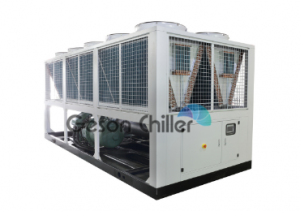
CENTRAL / PROCESS COOLING
Central process chiller systems for larger industrial loads and continuous chilled-water circulation.
Explore product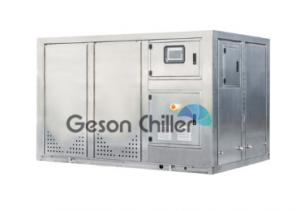
COMPACT / WATER-COOLED
Compact process chiller systems for space-limited installations and integrated turnkey cooling.
Explore product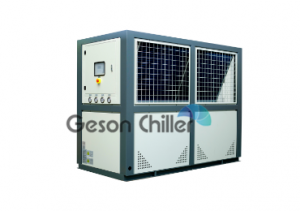
COMPACT / SCROLL
Packaged scroll configurations for stable process-water temperature control and service access.
Explore productPROCESS ENGINEERING FILE
The selected process chiller is reviewed around the process temperature, heat source, condenser arrangement, fluid circuit and installation location.
Depending upon the structure, each process chiller has a compressor, condenser, evaporator, pumps, pipes, high-pressure refrigerant relief valves, cooling towers, tanks, filters and fans.
A process chiller may utilize an air or water condenser. The thermostatic expansion valve causes pressure and temperature to drop; refrigerant then picks up heat from the liquid flowing through the evaporator and moves in a constant cycle.
The original guide identifies accurate temperature control, direct cooling at the heat source, reduced contamination, recirculated cooling liquid, high heat-exchange potential and compatibility with free-cooling systems.
Safety modulators protect the system from danger caused by low refrigerant temperature, low oil pressure or high condensing pressure.
PROCESS COOLING IN OPERATION
INDUSTRIAL APPLICATIONS
Process Chillers are applicable in a variety of industrial applications, including the industries listed in the original source page. Each use case needs the process heat source, water or glycol loop, target temperature and operating schedule reviewed before model selection.
Support mold, hydraulic-oil and equipment cooling around the machine cycle, process-water temperature, flow and production schedule.
View application ↗Review chilled-water duty for mixing, dough handling and longer production runs where process temperature affects product consistency.
Discuss application ↗Plan controlled cooling for chocolate, vegetable processing, meat handling and other temperature-sensitive process stages.
Discuss application ↗Define temperature control, fluid-side materials, operating schedule and any shutdown or process-compatibility requirements.
Discuss application ↗Stabilize roller and press temperatures to help control heat generated during production and preserve process consistency.
Discuss application ↗Review heat source, fluid compatibility, temperature range and operating conditions before selecting the chilled-water circuit.
Discuss application ↗Match equipment heat input, required stability, water quality, flow and alarm requirements to the selected cooling package.
Discuss application ↗Assess cutting-fluid or equipment duty, ambient conditions and installation constraints for the required process-cooling system.
Discuss application ↗PLACEMENT + PROTECTION
The original guide covers placement and safety after applications. The final installation arrangement depends on unit size, process connections, heat rejection and access for routine service.
The source guide notes that a Process Chiller may be installed beside the process, in a separate room or outdoors, depending on site conditions and unit size.
The original safety guidance identifies protective controls for low refrigerant temperature, low oil pressure and high condensing pressure. Final safety devices are confirmed for the selected configuration.
Before installation, confirm process piping, service access, electrical supply, ventilation or heat-rejection conditions, drainage and the boundary between factory supply and site work.
SERVICE CHECKLIST
The source page provides daily, monthly, semi-annual and annual maintenance guidance. The three review windows below retain the practical checks while keeping the final schedule subject to the selected equipment documentation and site maintenance plan.
Check chiller use and sequencing, complete a visual inspection and verify setpoints and safety systems are operating as intended.
Review evaporator and condenser fouling as needed, inspect filters and insulation, check for leaks and verify control functions according to the applicable equipment instructions.
Review compressor assembly, oil system, electrical connections, water flow and refrigerant condition in line with the selected model documentation and site maintenance plan.
COMMON OPERATING CHECKS
These source-derived checks help define the issue for a qualified service review. They are not a substitute for the selected model’s operating manual, safety procedures or trained service personnel.
Review line voltage and connections, three-phase connection where applicable, circuit breakers or fuses, and the power-switch position before further diagnosis.
Check reservoir level, process lines and valves, coolant suitability, liquid filter condition, piping restriction and pump operation before altering setpoints.
Review power supply, air filter or condenser condition, coolant suitability, heat-transfer performance, refrigerant circuit, surrounding temperature and evaporator freeze-up risk.
PROCESS CHILLER FAQ
These answers preserve the original guide’s Central/Compact categories, components, application, placement and closed-loop process-cooling focus.
A process chiller is a thermal appliance that eliminates heat produced by a given process. It continuously conducts chilled water through a closed loop to reduce increasing process temperatures.
GESON categorizes its Process Chillers into Central Process Chillers and Compact Process Chillers. Central Process Chillers cover -30°F to 65°F and can handle from under ten to over 200 tons; Compact Process Chillers range from one to 40 tons and are fully integrated turnkey systems.
Depending on the structure, a process chiller consists of a compressor, condenser, evaporator, pumps, pipes, high-pressure refrigerant relief valves, cooling towers, tanks, filters and fans.
Process chillers are used in plastics, baking, food, pharmaceutical, printing, chemical, metal finishing, composite, laser cutting, dry-cleaning, boat and airplane manufacturing and other industrial applications.
Depending on the place and the size of the Process Chiller, it may be placed directly beside the process, in a separate room or outdoors. A GESON representative can assist with the project requirements.
PROJECT REVIEW / GESON ENGINEERING
Share the application, heat load, fluid, temperatures, design flow, operating schedule and installation conditions for a model-specific review.