
GESON / COMMERCIAL + INDUSTRIAL HEAT PUMP SYSTEMS
SOURCE CONDITIONS · HEATING + COOLING DUTY · SYSTEM INTERFACES
Heat-pump systems start with the heat source.
A heat pump transfers heat through a refrigeration cycle. The correct configuration is selected from the available source, required heating or cooling duty, delivery temperatures, operating schedule and the complete system boundary.
HEAT PUMP / DEFINITION
One thermal machine.
Two directions of operation.
In heating mode, the system absorbs heat from the available source and releases it to the project’s water or air delivery system. In cooling mode, the refrigeration cycle removes heat from the project load and rejects it to the selected source or heat sink.
The word “heat pump” does not determine the system by itself. Source temperature, delivery temperature, flow, climate, load profile, controls and equipment boundary determine whether a configuration is suitable.
OPERATING MODES / ENERGY DIRECTION
Design the system around the season and the duty.
The original page describes heat pumps as systems capable of heating and cooling. The final operating sequence, capacity and temperatures must be confirmed for the selected equipment and stated project conditions.
Heating
Available source→Heat pump→Useful heating
Review the low-side source condition, required supply and return temperature, hydraulic flow, seasonal demand, storage or buffer arrangement and any supplementary heat strategy.
Cooling
Cooling load→Heat pump→Selected heat sink
Review chilled-water or air delivery conditions, source or ambient heat rejection, flow, operating hours, control sequence and the required site infrastructure.
SYSTEM ROUTES / SOURCE MATCH
Match the heat pump to the available source and useful duty.
The original Heat Pump page identifies air-source, water-source, ground-source and commercial heat-pump systems. These product routes provide a practical starting point for a model-specific review.
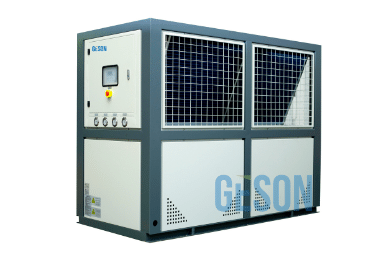
01
Use outdoor air as the source or heat sink
An air-source configuration exchanges heat with outdoor air. The design review starts with seasonal ambient conditions, unit placement, airflow clearance, defrost strategy where applicable and required water or air delivery temperatures.
Open system route ↗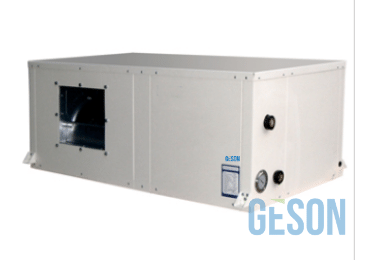
02
Use a defined water loop or water source
A water-source configuration is reviewed around the source-water temperature range, available flow, water quality, heat-exchanger materials, filtration, pumping and the permitted project boundary.
Open system route ↗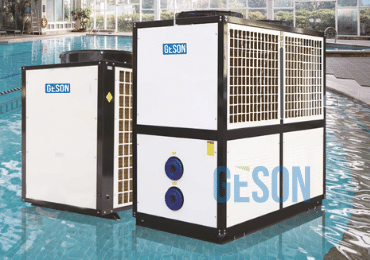
03
Deliver a defined water-temperature duty
For pools, hotels and commercial water systems, the proposal must define the required water temperature, heat loss, operating hours, water chemistry, hydraulic arrangement and the expected seasonal use.
Open system route ↗APPLICATION FIT / DUTY CONTEXT
Use the application to define the engineering conversation.
Heat pumps may support commercial buildings, domestic water, pools, industrial utilities and other controlled thermal duties. Each application needs a stated load, temperature requirement, source condition and operating profile.
Scheduled hot-water demand
Review occupancy pattern, storage, recovery period, delivery temperature, circulation loop, water treatment and the boundaries between equipment and site piping.
Water temperature held across the season
Review pool volume, required water temperature, evaporation and ambient loss, cover use, operating schedule, water chemistry and hydraulic flow.
Heating and cooling system coordination
Review the building load, source conditions, hydronic delivery temperatures, ventilation or terminal units, controls and operating strategy.
Process and utility heat duty
Review the process temperature requirement, heat source, water quality, fluid compatibility, seasonal profile, recovery opportunity and reliability needs.
SYSTEM BOUNDARY / FOUR INTERFACES
Specify the full heat-pump system, not only the unit.
Source-side conditions, the selected refrigeration package, the load-side delivery loop and controls/service responsibility all influence the selected model and project outcome.
Source side
Outdoor air, source water or ground-loop conditions determine the heat-exchange environment. Confirm the design range rather than specifying from a nominal capacity alone.
Refrigerant circuit
Compressor, refrigerant, heat exchangers, protection and controls are confirmed for the selected model, operating temperatures, destination requirements and written scope.
Load side
The required water or air delivery temperature, flow, fluid, storage and distribution network define the useful heating or cooling duty at the site.
Controls + service
Sequencing, monitoring, alarms, electrical supply, remote interface, access and service responsibility should be allocated before the final system proposal.
PROJECT BRIEF / INPUTS FOR SELECTION
Send the working conditions before comparing capacity.
A suitable proposal needs the source and the delivery side described together. State the project conditions below so GESON can review the thermal duty and system interfaces.
Share Project Conditions- 01
Duty and operating mode
State whether the project needs heating, cooling, simultaneous load management or a seasonally reversible system.
- 02
Source conditions
Provide outdoor air design conditions, or the source-water / ground-loop temperature range, flow and water-quality information.
- 03
Delivery temperatures
State entering and leaving temperatures, design flow, fluid or glycol details, pressure-drop allowance and temperature-control objective.
- 04
Application profile
Describe the facility, daily and seasonal schedule, peak load, pull-down or warm-up requirement and service continuity expectations.
- 05
Plant interfaces
Confirm pumps, tanks, heat exchangers, air handlers, fan coils, pool equipment, controls, electrical supply and site-supplied work.
- 06
Site constraints
Provide location, climate, sound restriction, installation space, corrosion exposure, lifting access, destination and project documentation needs.
HEAT PUMP FAQ
Questions before the system is selected.
These answers preserve the original page’s central topic—source, heating, cooling and application—while keeping final performance tied to selected equipment and stated conditions.
01What is a heat pump?+
A heat pump transfers heat through a refrigeration cycle. Depending on the selected operating mode and system design, it can move heat from a source to a water or air delivery system for heating, or move heat away from a cooling load to a suitable heat sink.
02Can the same heat-pump system provide heating and cooling?+
A reversible heat-pump system may be selected for heating and cooling, subject to the model, source conditions, required delivery temperatures, control arrangement and project scope. Confirm the operating modes in the written proposal.
03How do air-source and water-source heat pumps differ?+
Air-source equipment exchanges heat with outdoor air and is selected around ambient condition, airflow, placement and sound. Water-source equipment uses a defined water loop or water source and requires source-water temperature, flow, water quality, pumping and heat-exchanger review.
04What information is needed for heat-pump selection?+
Provide the application, heating or cooling load, source condition, entering and leaving temperatures, flow, fluid or glycol details, operating schedule, electrical supply, installation constraints, controls requirements and destination country.
05Can a heat pump be selected for pool water or domestic hot water?+
Yes, these applications are reviewed around the required water temperature, hydraulic flow, seasonal operation, heat loss, water chemistry, storage or circulation arrangement and the approved equipment scope.
06What does a heat-pump proposal need to confirm?+
The proposal should state the selected model, rated duty and input power at defined conditions, source and load-side temperatures, controls, component configuration, electrical supply, accessories, installation interfaces and any applicable documentation scope.
MODEL-SPECIFIC PROPOSAL / GESON ENGINEERING
Start the heat-pump review from the source and the useful thermal duty.
Send the application, heating or cooling requirement, source conditions, delivery temperatures and flow, operating schedule, electrical supply, site constraints and destination for a project-specific proposal.