
We offer -40℉(-40℃) Cooling for Your Extra-cold Applications
Low temp chiller complexities are not a problem for our team of engineers.
GESON nderstand that low evaporator refrigerant temperature applications can be particularly challenging., with items like fluid viscosity, pump selection and oil flow parameters
Our team offers cryogenic cooling to a temperature of -40°F. This can serve as a chilling solution in any extreme circumstances.
We specialize in low temperature solutions for every need you have. With our engineering experience, you can rely on us for reliable and effective equipment.
Whether you’re looking for -40°F chilled calcium chloride or -22°F chilled fuel, we have the solution
GESON understand that every enterprise is unique and will offer you the perfect equipment solution to fit your workflow needs.
We have the ingenuity and engineering expertise to figure out even the most complicated low-temp chillers needs.
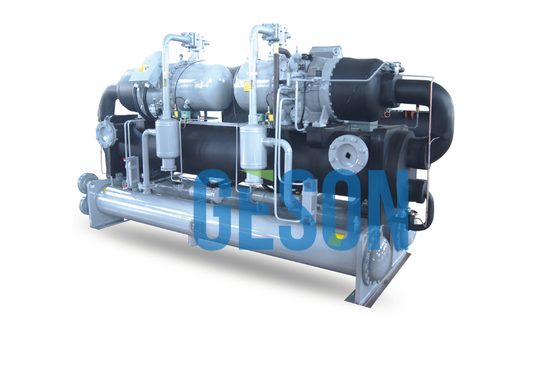
-35℃ Low-temp Chiller
42kw~800kw
10USRT~230USRT
- -35℉ Low-temperature Cooling System
- Can provide low-temperature refrigerant between -35°C
- This series of units consists of two independent and mutually restrictive refrigeration cycle systems
- They are high-temperature refrigeration cycle systems and low-temperature refrigeration cycle systems, respectively.
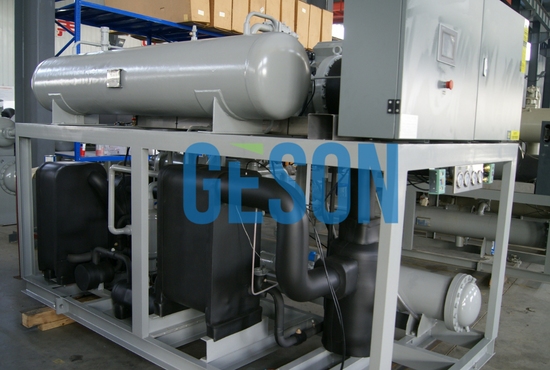
-50℃ Low-temperature Chiller
16kw~700kw
4USRT~200USRT
- An economizer, precooler, regenerator, suction temperature control valve, and other devices are added to the whole system
- And is equipped with a perfect control system, which effectively improves the stability of the unit operation.
- And the energy efficiency ratio has been greatly improved
- So as to achieve the goal of saving energy and reducing the consumption for users and saving energy
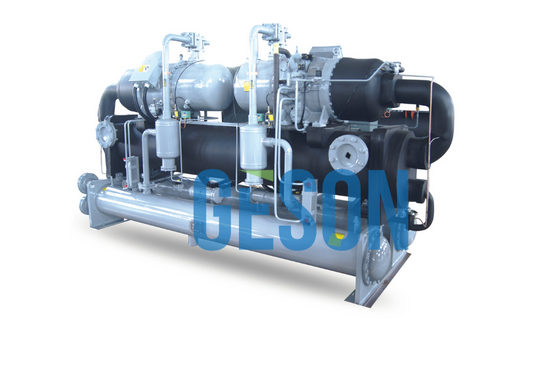
-75℃ Cascade Chiller
42kw~105kw
10USRT~30USRT
- The Cascade refrigeration unit consists of two single-stage refrigeration cycles of high-temperature and low temperature
- The high-temperature stage is mainly composed of a semi-hermetic screw compressor, an external secondary oil separator, a water-cooled condenser, a filter, an economizer, a thermal expansion valve, and a condensing evaporator.
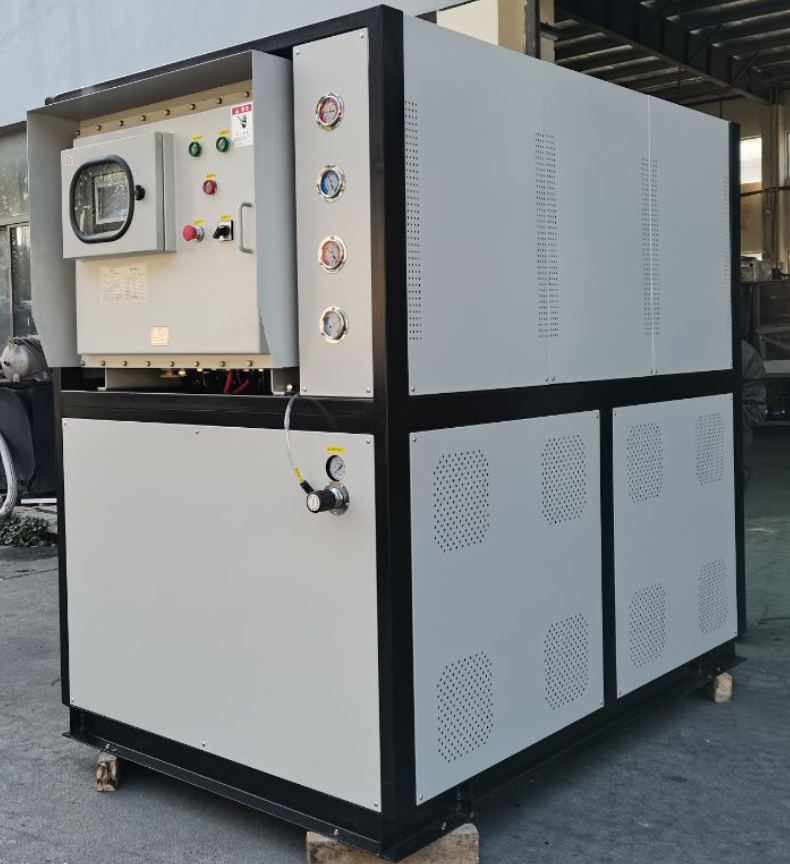
-80℃ Cascade Ultra-low Temperature Chiller
10kw~50kw
3USRT~15USRT
- The low-temperature stage is mainly composed of a semi-hermetic screw compressor, external secondary oil separator, water-cooled cooler, evaporative condenser, filter, oil cooler, electrical control system, etc.
- Can be selected environmental friendly Refrigerant R404A or R507 refrigerant
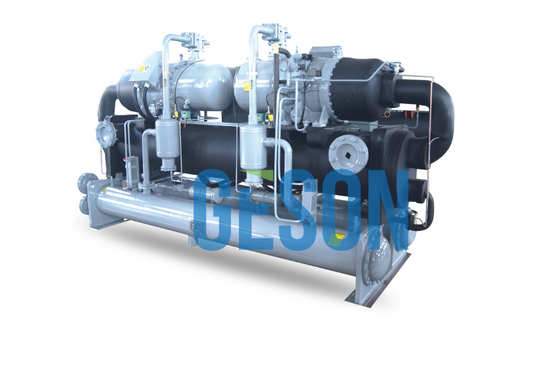
Low Temperature Glycol Chillers
10kw~50kw
3USRT~15USRT
- The low-temperature stage is mainly composed of a semi-hermetic screw compressor, external secondary oil separator, water-cooled cooler, evaporative condenser, filter, oil cooler, electrical control system, etc.
- Ultra low temperature recirculating chillers can be applied in many industries application.
Low Temperature Chiller Applications
Industrial Processes: Maintaining precise low temperatures for chemical reactions, polymerization, and crystallization.
Pharmaceutical and Biotechnology: Preserving vaccines, drugs, and biological samples in storage and transportation.
Laboratory Research: Enabling experiments involving superconductors, cryopreservation, and cold-temperature physics.
Food and Beverage: Quick cooling and freezing of food products, including specialty items like ice cream.
Automotive Testing: Simulating extreme cold conditions for vehicle and component performance evaluation.
Aerospace Testing: Verifying aircraft component and material performance under extreme cold conditions.
Environmental Chambers: Creating controlled temperature and humidity conditions for testing products and materials.
Medical and Healthcare: Storing and preserving blood, tissue samples, pharmaceuticals, and vaccines.
Medical Research: Studying the effects of low temperatures on biological materials for cryobiology and cryopreservation advancements.
Low Temperature Chiller Line
| Low temperature water cooled chiller | ||||||
| 10℃~32℃ | -7℃~9℃ | -10℃~10℃ | -7℃~10℃ | -35℃~-8℃ | -50℃~-25℃ | -85℃~-40℃ |
Chiller Low Evaporator Refrigerant Temperature
| Item | Low evaporator refrigerant temperature Deg.C (℃) | Condensing SCT Deg.C | |
| R22 | -40℃~12.5℃ | 10~60 | Cheaper, Not environment-friendly |
| R507 | -40℃~7.5℃ | 10~50 | Environment-friendly |
| R404A | -40℃~7.5℃ | 10~50 | Similar as R507 |
| R407C | -15℃~12.5℃ | 20~60 | Environment-friendly |
| R134a | -20℃~20℃ | 20~70 | Environment-friendly |
what is a low temperature water chiller?
A low temperature chiller is a type of process chiller that is designed to operate at extra low temperatures. Low temperature chillers are used in a variety of industrial and commercial applications, such as food processing, pharmaceutical manufacturing, and chemical production.
Low temperature chiller is the temperature range of temperatures falling below what is considered a low freezing point and above the temperatures associated with cryogenics. The chiller low evaporator refrigerant temperature of this classification is from -58° F to -148° F (-50° C to -100° C). This ultra low temp chiller temperature range encompasses applications for food products, pharmaceuticals, and chemical processes.
It is usually used in the petroleum and chemical industries as laboratory environmental chambers and thermal storage equipment. The size and type of equipment used varies from simple refrigeration environmental chambers of only a few horsepower (kW) to large custom-designed and often field-erected systems that range to several hundred horsepower (kW).
Large units may apply a combination of one or more open-cascade Chillers while maintaining a precise temperature.
LOW-TEMP CHILLER APPLICATIONS
Our custom-capable, low-temperature chiller solutions are robust and cover a wide range of industries and applications. For example:Aerospace, food processing, energy, chemicals, automotive and product testing. also ice skating at ice rinks.
Types of low temperature chillers
There are four main types of low temperature chillers: air-cooled, water-cooled, brine-cooled, and evaporative-cooled.
Air-cooled chillers are the most common type of low temperature chiller. They use a refrigerant to cool air, which is then circulated through the space to be cooled. ow temperature water cooled chiller work similarly, but use water instead of air to cool the refrigerant.
Brine-cooled chillers use a mixture of water and salt to cool the refrigerant. The brine is circulated around the coils of the chiller and helps to remove heat from the refrigerant. Evaporative-cooled chillers use water to cool the air that is being circulated through the space. As the water evaporates, it removes heat from the air, providing a cooling effect. Advantages of using a low temperature chiller
What are the components of a low temperature chiller system?
A low temperature chiller system typically contains four main components: a compressor, a condenser, an evaporator, and an expansion valve. The compressor is responsible for circulating refrigerant throughout the system. The condenser helps to cool and condense the refrigerant. The evaporator helps to evaporate the refrigerant. The expansion valve helps to expand the refrigerant.
Tips for maintaining your low temperature chiller
A low temperature chiller is an important part of any cooling system. Here are some tips for maintaining your low temperature chiller:
1. Check the evaporator refrigerant temperature regularly. If the temperature is too low, it could cause the chiller to malfunction.
2. Keep the chiller clean and free of debris. This will help ensure that it operates efficiently.
3. Inspect the chiller regularly for any signs of wear or damage. If you notice any problems, contact a professional for repairs.
By following these tips, you can help ensure that your low temperature chiller works properly and lasts for years to come.
What are the best Low Temperature Chiller brands?
There are a few different brands low temperature chiller manufacturers that make low temperature chillers,
but some of the best include
- GESON Low temperature chiller
- Trane Low temperature chiller
- Thermo Fisher Scientific,
- Sanyo,
- Panasonic.
- Drake Low Temperature Chiller
These brands include low refrigerant temperature trane have a reputation for quality and reliability, so you can be sure you’re getting a good product.
Conclusion
As the name suggests, a low temperature chiller is a cooling system that is used to maintain low temperatures. There are many different types of low temperature chillers, and they are made by a variety of different manufacturers. Some low temperature chillers are designed for specific applications, while others are more general purpose. Low temperature chillers can be rented from many different companies, and they are an important part of many industrial and commercial operations.
If you are in the market for an extra low temperature chiller, there are many low temperature chiller manufacturers to choose from. You can also rent a low temperature chiller if you only need it for a short period of time. Low temperature chillers are perfect for applications that require very cold temperatures, such as food processing or pharmaceuticals.
A low temperature cooling system is a cooling system that can lower the temperature of a fluid below its ambient surroundings. It is typically used to remove heat from a process or product, making it an essential piece of equipment in many industrial and commercial applications. Low temperature chillers can be either air-cooled or water-cooled, with the latter being more effective at lower temperatures. Ultra low temperature chillers are also available for applications that require even lower temperatures.
Looking for a low-temperature chiller that can handle your cooling needs? Check out our selection of reliable and durable options today!
- The Low Temperature Chiller is perfect for those who want to keep their coolant at a lower temperature.
- The chiller has a durable cold plate and pump, making it ideal for long-term use.
- The chiller is also quiet, so you won’t have to worry about disturbing your neighbors.
- The chiller is easy to install and comes with all the necessary hardware.
- The chiller is also backed by a one-year warranty.
Welcome to visit our other Industrial Chillers.
Low Temperature Chiller Size Calculator
1 m³=264.17 Gallon=1000 Litre
Max: 40℃
Min: 5℃, lower than this, please email us for advise.
1 Ton = 3.517 kw, 1kw = 0.2843 Ton
1 m³=264.17 Gallon=1000 Litre
Max: 40℃
Min: 5℃, lower than this, please email us for advise.
1 Ton = 3.517 kw, 1kw = 0.2843 Ton
 Service and Maintenance
Ultimate FAQ – выбор рефрижераторов, охлаждающих жидкостей, смазочных материалов.
Наименование хладагентов Буква “R” и группа цифр или букв за ней обозначают хладагенты, которые пишутся по определенным правилам, основанным на составе молекул хладагента R404…
Open article ↗Service and MaintenanceХладагент R410a против R22: в чем разница
Refrigerant R410a vs R22: What Is The Difference | GESON CHILLER R410A Chillers What Is the Difference Between R410A and R22? R410A refrigerant is a new replacement refrigerant for the R2…
Open article ↗Service and MaintenanceRefrigerant Charging Methods-GESON Chiller
Refrigerant Charging Methods-GESON Chiller Refrigerant charging is an important and complex step in the installation and maintenance of air conditioning systems and refrigeration systems…
Open article ↗GESON / TECHNICAL REVIEW
Have a project that needs more than a generic answer?
Send the application, duty, fluid, temperatures, heat-rejection conditions and site constraints. GESON can review the next technical step with the specific project context.