
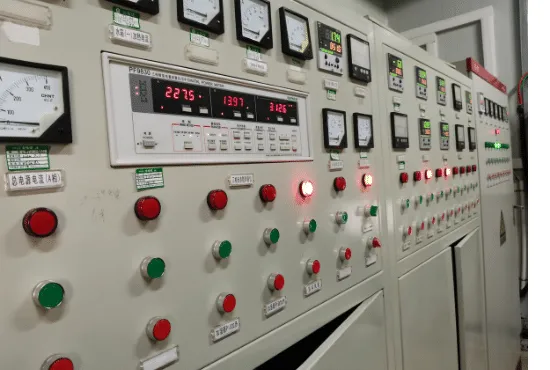
Industrial chiller refrigerant charging is a measured commissioning procedure, not a process of adding refrigerant until one pressure, current or sight glass “looks right.” The correct method depends on the chiller model, refrigerant, circuit design, whether the charge was completely recovered, and the manufacturer’s service instructions.
Refrigerant recovery, leak repair, pressure testing, evacuation and charging must be performed by personnel qualified under the destination country’s rules. Never vent refrigerant, mix refrigerant types or use the compressor as a vacuum pump.
Refrigerant Charging Methods: What Each Method Can Prove
| Method or signal | Correct role | What it cannot prove alone |
|---|---|---|
| Weighed charge | Measures the mass transferred into a circuit against the OEM or nameplate charge. | It does not confirm correct operation after field piping, component changes or an incomplete recovery. |
| Superheat | Shows refrigerant condition leaving the evaporator and helps assess evaporator feed and compressor protection. | It cannot by itself distinguish undercharge from a feed restriction, low load or sensor error. |
| Subcooling | Shows liquid condition leaving the condenser and supports charge/feed diagnosis. | It must be interpreted with load, condenser condition, refrigerant and receiver configuration. |
| Operating pressures | Convert to saturation temperatures and help evaluate evaporating and condensing conditions. | A single pressure is not a charge quantity and changes with load and heat-sink conditions. |
| Sight glass | May indicate liquid-line condition and moisture status on designs that include one. | Bubbles do not uniquely prove undercharge; flash gas, pressure drop and non-condensables can affect appearance. |
| Compressor current | Confirms electrical loading and supports commissioning against the unit data. | It cannot determine refrigerant mass because voltage, load, temperatures and compressor control also affect current. |
1. Weighed Refrigerant Charge
When a circuit has been properly recovered, repaired, leak-tested and evacuated, charging by mass is the primary starting method. Use a calibrated scale and the exact refrigerant specified for the model. The required charge may be listed per circuit, not only for the entire chiller.
The nameplate or OEM service document takes priority over a generic charging chart. Field-installed piping, remote condensers, receivers or factory-approved component changes may require a documented adjustment. If the recovered mass is unknown or refrigerant remains trapped in the circuit, simply adding the full nameplate charge can overcharge the system.
2. Superheat and Subcooling Verification
Superheat and subcooling are diagnostic and commissioning values, not universal charging targets. Calculate them using the correct pressure-temperature relationship for the actual refrigerant. For zeotropic blends, use the appropriate dew or bubble reference specified by the refrigerant and equipment documentation.
- High superheat with low subcooling may support an undercharge diagnosis, but leak evidence and liquid-feed checks are still required.
- High superheat with normal or high subcooling can point toward a restriction, valve/control problem or loss of liquid pressure at the expansion device.
- Low superheat may indicate overfeeding, low load, sensor error or liquid floodback risk.
- High subcooling may occur with overcharge or a backed-up liquid column, but condenser and receiver configuration must be considered.
Record stable readings only after chilled-fluid flow, heat load, condenser airflow or water flow, and compressor staging are within the OEM test conditions.
3. Pressure-Based Checks
Pressure readings are necessary for service, but charging “to a pressure” is not a valid universal method. Suction and discharge pressures move with leaving-fluid temperature, heat load, ambient dry-bulb or condenser-water temperature, compressor capacity and refrigerant type.
Use pressure to calculate saturation temperature, compression ratio and approach conditions. Interpret it together with measured line temperatures, superheat, subcooling, fluid flow, current, alarm history and the model-specific operating envelope.
4. Sight-Glass Inspection
A liquid-line sight glass can support diagnosis when the unit design includes one. Carrier documentation notes that bubbles may be associated with insufficient charge or non-condensables, and its service procedure still requires leak repair, recovery, testing and recharging—not adding refrigerant until bubbles disappear.
Flash gas caused by liquid-line pressure drop, insufficient subcooling, a rising liquid line or a restriction can also create bubbles. Some receiver-equipped systems may show changing liquid conditions during load transitions. Check the moisture indicator according to the manufacturer’s temperature and colour guidance.
5. Compressor Current Is a Verification Reading
Compressor current is affected by suction and discharge conditions, voltage, phase balance, motor efficiency, load and capacity control. It is useful for commissioning and overload diagnosis, but it does not identify the correct charge mass.
Compare measured voltage and current with the unit electrical data under known operating conditions. Do not continue adding refrigerant merely because current is below a chart value; a low process load or unloaded compressor can produce the same result.
Safe Charging Workflow for an Industrial Chiller
- Identify the equipment. Confirm model, serial number, circuit, refrigerant, lubricant and nameplate/OEM charge.
- Determine why charge was lost or removed. Do not treat recurring top-ups as normal maintenance.
- Recover the refrigerant. Use compatible recovery equipment and approved cylinders; follow local recovery, recycling or reclamation rules.
- Repair and verify leaks. Locate the leak, complete the repair and perform the required initial verification.
- Pressure-test correctly. Use the OEM-approved test medium and never exceed the circuit’s permitted test pressure.
- Evacuate and confirm dehydration. Connect suitable vacuum equipment as specified; never evacuate with the chiller compressor.
- Charge the specified refrigerant by mass. Follow the OEM liquid/vapour charging procedure and blend-handling instructions.
- Commission under stable conditions. Verify flow, temperatures, pressures, superheat, subcooling, current, oil condition, controls and leak status.
- Record the service. Document refrigerant recovered and added, cylinder identification, leak location, repair, test results and final operating data.
Why a Leak Must Be Repaired Before Recharging
Refrigerant does not get “used up” during normal operation. A material loss points to leakage, recovery during service or an incomplete previous charge record. Adding refrigerant without locating the cause increases cost, emissions and the chance of contamination or overcharge.
Regulatory duties depend on destination country, refrigerant and charge size. In the United States, EPA Section 608 governs recovery, recycling, reclamation, technician certification and specified leak-repair obligations. Other markets have their own licensing, fluorinated-gas, cylinder, transport and recordkeeping rules.
Special Handling for Refrigerant Blends and A2L Refrigerants
Zeotropic refrigerant blends require the correct dew/bubble reference and the manufacturer-specified charging orientation to avoid composition shift. Never mix refrigerants or substitute a new refrigerant without an engineered retrofit review covering compressor, oil, elastomers, expansion device, controls, capacity, safety classification and local code.
A2L refrigerants such as R454B require equipment, tools, ventilation, ignition-control procedures and technician practices suitable for mildly flammable refrigerants. A2L service requirements are not satisfied by changing only the refrigerant cylinder.
Common Charging Errors
- adding refrigerant based only on suction pressure;
- using compressor current as a charge target;
- charging until all sight-glass bubbles disappear;
- mixing recovered refrigerant of unknown identity or condition;
- failing to repair or verify a leak;
- using the wrong blend charging procedure;
- ignoring chilled-water/glycol flow and condenser conditions;
- evacuating with the compressor; or
- omitting the final mass and commissioning record.
Information Required for GESON Service Review
| Send this information | Why it is required |
|---|---|
| Model and serial number | Identifies the correct circuit and service documentation. |
| Refrigerant and nameplate charge | Prevents wrong-fluid or wrong-mass assumptions. |
| Reason for service | Leak, component replacement, recovery, retrofit or performance complaint requires a different plan. |
| Recovered and added mass | Supports charge reconciliation and leak history. |
| Operating data | Fluid temperatures/flow, ambient or condenser water, pressures, superheat, subcooling and current verify commissioning. |
| Destination country | Determines refrigerant availability, technician, recovery and documentation requirements. |
Request Refrigerant Service Support
GESON can review refrigerant-related service and spare-parts requirements for legacy GESON equipment. Availability and scope depend on the model, serial number, refrigerant, destination regulations, technician access and written service confirmation. For a new chiller using R454B or R513A, request a model-specific selection rather than treating either refrigerant as a field drop-in.
Refrigerant Charging FAQs
What is the most accurate refrigerant charging method?
For a properly recovered, repaired, tested and evacuated circuit, charge by measured mass using the exact OEM or nameplate value, then verify operation with model-specific temperatures, pressures, superheat, subcooling, flow and electrical data.
Can refrigerant charge be set by suction pressure?
No. Suction pressure changes with refrigerant, load, fluid temperature, flow and compressor capacity. It is one diagnostic input, not a universal charge target.
Do bubbles in the sight glass always mean low refrigerant?
No. Undercharge is one possibility, but flash gas, pressure drop, restrictions and noncondensables may produce similar evidence. Use the full operating data and leak checks.
Can compressor current determine refrigerant charge?
No. Current varies with voltage, load, suction/discharge conditions and capacity control. Use it to verify electrical loading, not to calculate refrigerant mass.
Can GESON support refrigerant service for an older chiller?
GESON can review refrigerant-related service and spare-parts scope for legacy GESON equipment after confirming the model, serial number, refrigerant, destination regulations and qualified-technician access.
