
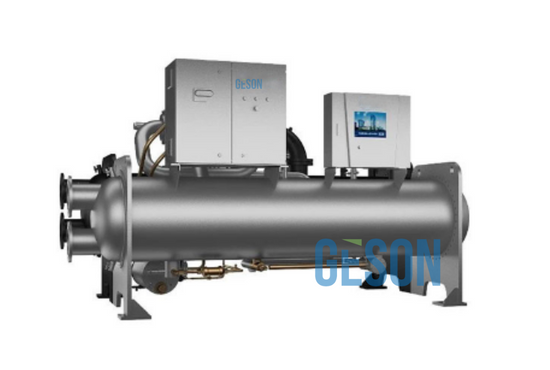
Centrifugal Chiller Project Review
A centrifugal chiller uses a dynamic compressor to raise refrigerant-vapor pressure and reject heat from a chilled-water or process-fluid loop. This technology is commonly evaluated for larger, relatively stable cooling loads, but its suitability depends on the required capacity, lift, minimum load, entering and leaving water temperatures, condenser-water conditions and plant operating profile.
GESON does not make a supply or performance commitment on this page. Centrifugal-chiller availability, the applicable manufacturing partner or configuration, refrigerant, capacity, efficiency, certifications and commercial scope must be confirmed in a project-specific written proposal.
When to Evaluate a Centrifugal Chiller
| Project factor | Why it matters |
|---|---|
| Design cooling load | Defines the compressor and heat-exchanger selection at the stated temperatures and flow |
| Minimum and seasonal load | Determines unloading range, staging and potential low-load stability limits |
| Chilled-water temperatures | Affect evaporating pressure, approach and compressor lift |
| Condenser-water temperatures | Wet-bulb climate, tower approach and water flow strongly affect lift and power |
| Plant configuration | Parallel chillers, pumps, towers and controls determine whole-plant efficiency and redundancy |
| Water quality and maintenance | Tube fouling increases approach temperature, lift and energy use |
| Power supply and starting method | Influence electrical design, harmonics, starting current and site integration |
| Destination requirements | Determine applicable codes, documentation, refrigerant rules and certification scope |
Centrifugal vs Screw Chiller Selection
| Selection point | Centrifugal chiller | Screw chiller |
|---|---|---|
| Compression principle | Dynamic compression using one or more impellers | Positive-displacement compression using meshing rotors |
| Operating map | Must be checked for lift, minimum load and surge margin | Not subject to centrifugal-compressor surge, but still has operating-envelope limits |
| Capacity control | May use inlet guide vanes, variable speed or other model-specific controls | May use slide valves, variable speed, compressor staging or combinations |
| Best comparison | Certified full-load and part-load performance at the same chilled-water and condenser-water conditions, plus whole-plant energy and lifecycle service requirements | |
Performance Must Be Stated at Rated Conditions
COP, kW/ton, capacity and IPLV cannot be evaluated without their rating basis. AHRI 550/590 and 551/591 standardize performance ratings for eligible vapor-compression water-chilling packages. For project conditions different from the standard rating points, request a manufacturer selection and an applicable NPLV or hourly energy analysis.
The proposal should identify whether compressor-only, packaged-chiller or complete-plant auxiliary power is included. Condenser-water pumps and cooling-tower fans can materially change plant energy even when the chiller itself has a favorable rating.
Request a Centrifugal Chiller Feasibility Review
Provide the application, design load, entering and leaving chilled-water temperatures, chilled-water flow, condenser-water entering/leaving temperatures, design wet-bulb, minimum load, operating hours, power supply, redundancy requirement and destination country. GESON engineers can then confirm whether a centrifugal, screw or alternative chiller configuration should proceed to a formal selection.
Model-specific product data required. Former capacity, power and COP tables have been removed because their rating conditions and current model status were not documented. Request a current selection showing capacity, input power, COP, IPLV/NPLV when applicable, water temperatures, flows, pressure drops, refrigerant, electrical data, dimensions and weights.
GESON provides industrial chiller engineering review and export-project coordination. Manufacturing source, certification scope, payment terms, lead time, production capacity and destination documentation are confirmed in the written commercial proposal.
How a Centrifugal Chiller Works
Low-pressure refrigerant vapor enters the compressor impeller. The rotating impeller increases vapor velocity, and the diffuser converts part of that velocity into pressure. The condenser then rejects the evaporator load plus compressor input to condenser water, causing the refrigerant to condense. A metering device reduces refrigerant pressure before it enters the evaporator, where it boils and absorbs heat from the chilled-water loop.
The expansion device does not vent refrigerant to the atmosphere. Refrigerant remains within the closed refrigeration circuit during normal operation.
Main Components and Procurement Checks
- Centrifugal compressor: confirm stages, drive arrangement, bearing/lubrication design, variable-speed scope and operating map.
- Evaporator: confirm rated approach, water flow, pressure drop, tube material, fouling allowance, cleaning access and freeze protection.
- Condenser: confirm entering/leaving water temperatures, flow, pressure drop, design pressure and refrigerant-storage/service provisions.
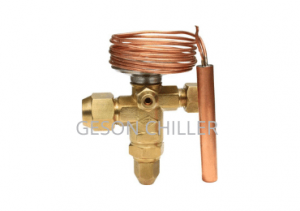
- Expansion and refrigerant controls: confirm stable control across the stated load and lift range.
- Starter or drive: confirm voltage, frequency, starting method, harmonics and cooling requirements.
- Safety devices: pressure-relief equipment must follow the selected unit design and applicable codes. Location and discharge piping are model- and site-specific.
Surge, Lift and Minimum Load
Surge is an unstable centrifugal-compressor condition that can occur when the compressor cannot maintain the required pressure rise, commonly under combinations of high lift and low refrigerant flow. The actual boundary is model-specific. Do not use a universal minimum-load percentage.
Ask for the certified operating envelope and selection data at the project’s maximum condenser-water temperature, lowest leaving chilled-water temperature and minimum expected load. Chiller staging, tower-water reset, condenser-water flow and control sequences must keep the machine inside its permitted operating map.
Water Treatment and Maintenance
Condenser fouling raises approach temperature and compressor lift. A water-treatment program should address scale, corrosion and biological growth, while tower blowdown and cycles of concentration are managed for the site water chemistry. Confirm tube-cleaning access, refrigerant-isolation provisions, leak monitoring, drive maintenance, controls support and spare-parts scope before purchase.
Centrifugal Chiller FAQ
Is a centrifugal chiller always more efficient than a screw chiller?
No. Compare eligible selections at the same full-load and part-load conditions and include pumps and cooling-tower fans. Load profile, lift, staging and operating hours determine the project result.
What causes centrifugal chiller surge?
Surge occurs when the centrifugal compressor cannot maintain stable forward refrigerant flow at the required pressure rise. High lift combined with low load is a common risk, but the operating boundary is model-specific.
What data are needed for centrifugal chiller selection?
Provide design load, chilled-water entering/leaving temperatures and flow, condenser-water temperatures and flow, design wet-bulb, minimum load, operating hours, power supply, redundancy and destination.
Does GESON guarantee the capacities or COP values previously shown on this page?
No. Capacity, COP, IPLV, refrigerant, dimensions, weight and certifications require a current model-specific selection at stated rated conditions and written confirmation.
Technical References
All Types of Industrial Water Chiller Products
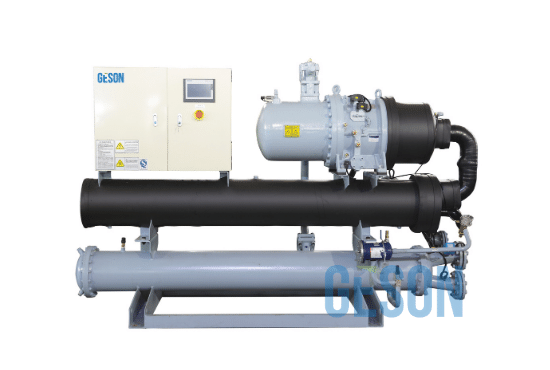
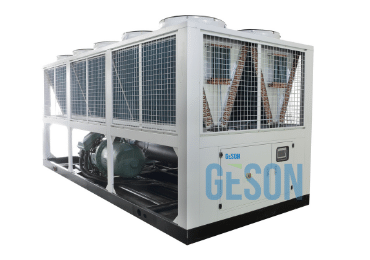
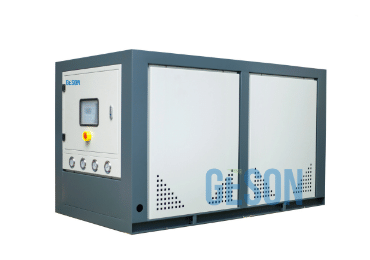
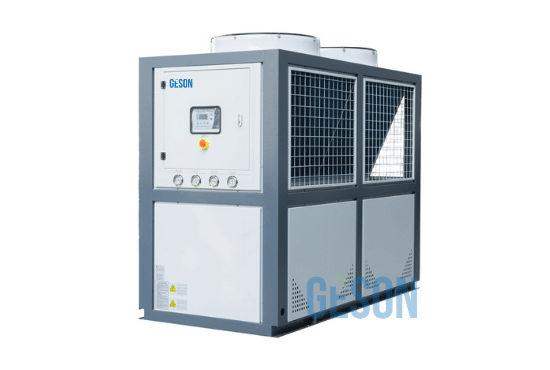
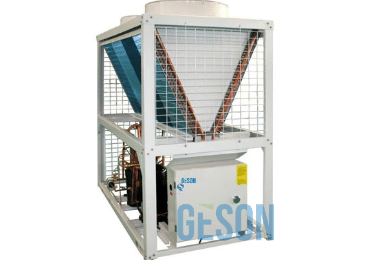
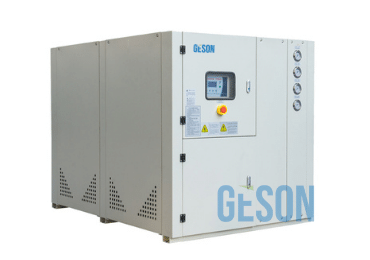
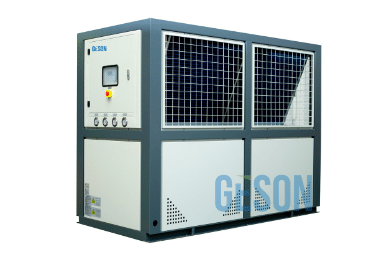
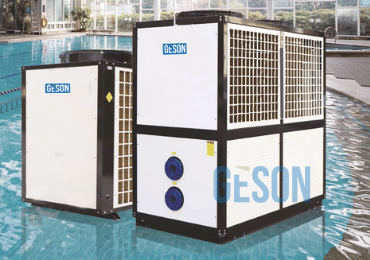
Air Source Heat Pump
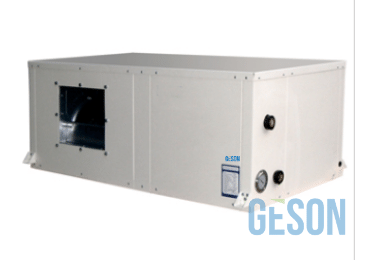
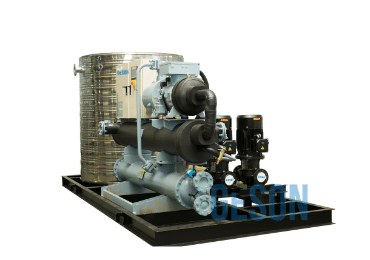
Water Source Heat Pump
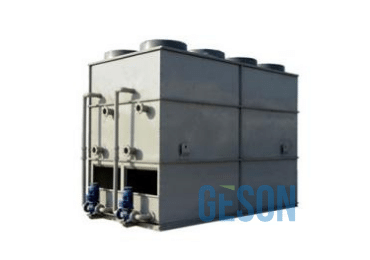
Water Cooling Tower
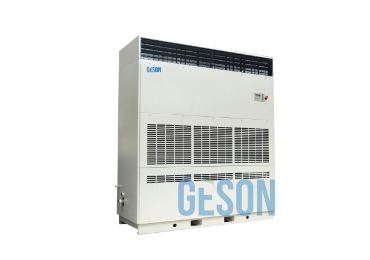
Air Coditioning Chiller
Who We Are?
Are you looking for a professional air chiller manufacturer?
Geson chiller focuses on Industrial/Commercial air chiller unit over 15 years.
Air Chiller Unit, also known as an Air-Cooled Chiller, is a kind of equipment that uses cooling methods to cool the equipment to achieve the technological purpose in a variety of industries with different processes. It is widely used in Pharmaceutical, Chemical, Plastic Injection mold cooling and extruding machinery, Computer data center room, Food and Beverage process cooling, Cold storage room, MRI and Laser machine, and other central air-conditioning projects. Because the source of heat exchange is gas and it is equipped with a special electric fan, it is called “air cooling”.
Geson Chiller Air-Cooled Chillers are divided into Air-Cooled Screw and Scroll Chillers.
Easy maintenance and low water loss make Geson Chiller’s Air-cooled Chillers very suitable for areas with water scarcity or with poor water quality.
If you have more questions about water chillers, free to Contact Us.
Advantages of Geson Chiller
Your expert chiller manufacturer in China
Your Top Quality Chillers Manufacturer In China
Top Brand Components
Ensure Your Top Quality Chiller
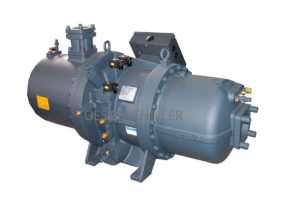
Top Quality Screw Compressor With Certificate
Compressor efficiency is evaluated within the complete selected chiller at stated conditions;
Refrigerant is confirmed by model and destination requirements.
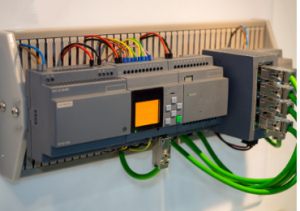
LCD Touch Controller
Automatic Detection of Cold Water Outlet Temperature;
Automatic Detection of Operating Conditions;
Automatically Record the Alarm and Send Trouble Alarm;
Can Realize Remote Control;
Reserve RS-485 Communication Interface, or Ethernet Port;
Customize Display Language: Chinese, English, Russian, Spanish;
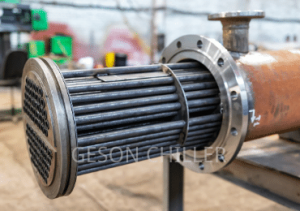
Service life depends on operating conditions, water quality, duty cycle and maintenance;

Applications

Chiller For Plastic Industrial

Beer And Wine Fermentation Chiller

Chemical Processing Chiller

Computer Data Center Chiller

Food And Dairy Chiller

Hotel HVAC Chiller

MRI And Laser Chiller

Pharmaceutical-Formulation-chiller