
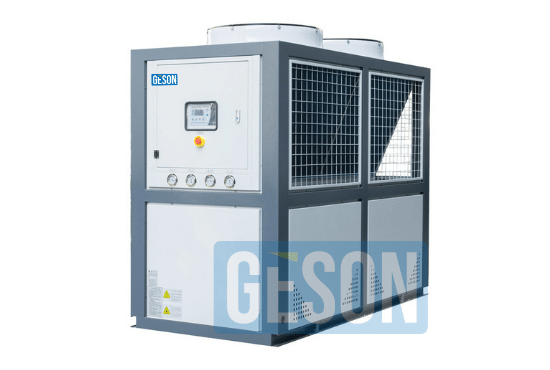
20 Ton Industrial Chiller Selection
Current model selection required. Former model, certification, production-capacity and option claims have been removed because their current status and rated conditions were not documented. Request a proposal showing net capacity, input power, efficiency, fluid temperatures, flow, ambient condition, pressure drop, refrigerant, electrical data, dimensions and weight.
GESON provides industrial chiller engineering review and export-project coordination. Manufacturing source, certification scope, payment terms, lead time, production capacity and destination documentation are confirmed in the written commercial proposal.
We will answer your email shortly!
All Types of Industrial Water Chiller Products
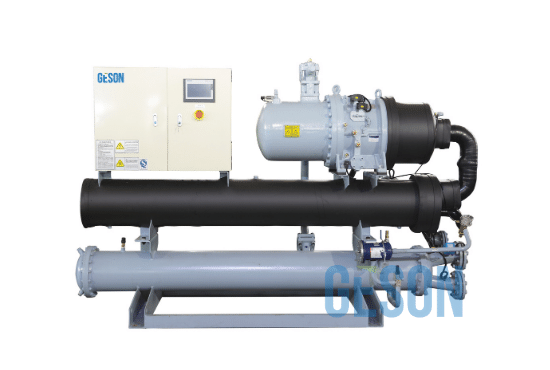
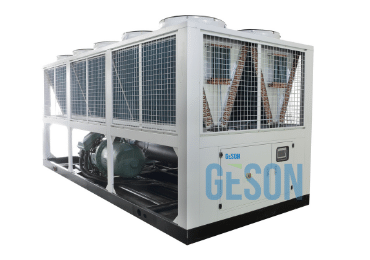
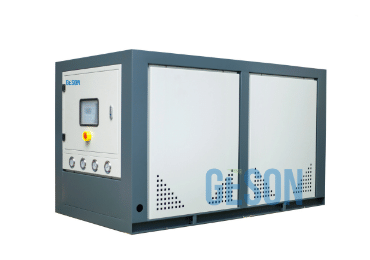
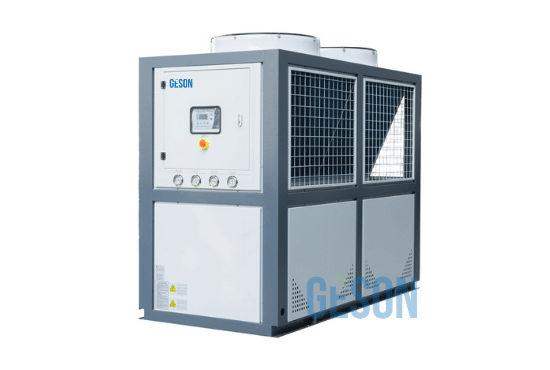
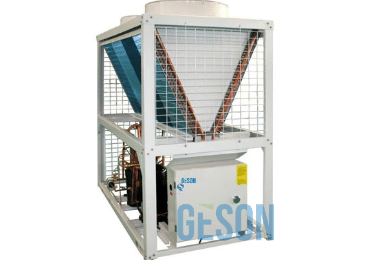
Modular Air Chiller
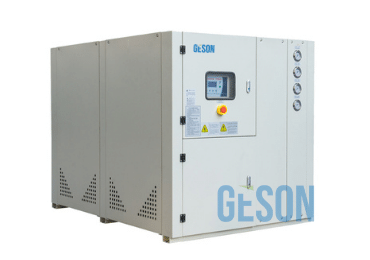
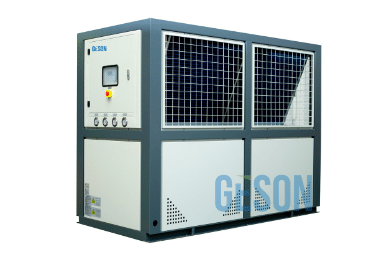
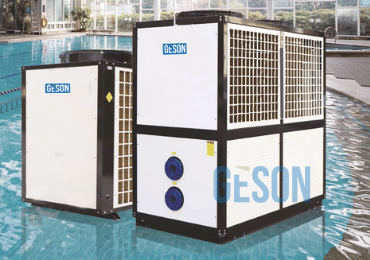
Air Source Heat Pump
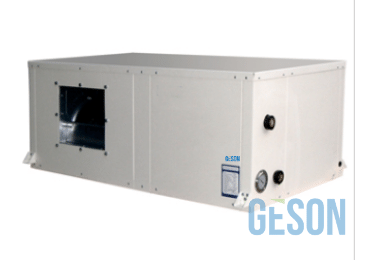
Water Source Heat Pump
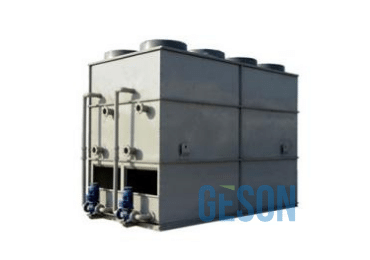
Water Cooling Tower
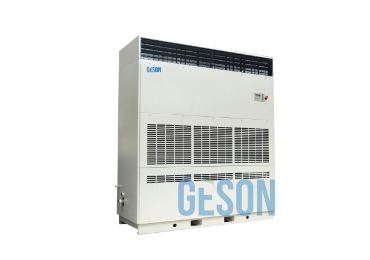
Air Coditioning Chiller
Who We Are?
20 Ton Industrial Chiller Selection
A nominal 20 refrigeration ton load equals approximately 240,000 Btu/h or 70.3 kW of heat removal. This conversion does not mean every “20 ton chiller” will deliver 70.3 kW under every condition. Available capacity changes with leaving-fluid temperature, ambient or condenser-water temperature, glycol concentration, flow, fouling allowance and the selected refrigerant circuit.
GESON can review air-cooled and water-cooled 20-ton-class industrial chiller requirements. The applicable model, compressor arrangement, refrigerant, certified performance, materials, voltage, options, certifications, price and delivery scope must be confirmed in a current written proposal.
Required Rated Conditions
| Selection input | Why it changes the result |
|---|---|
| Required process heat load | Determines whether 20 RT provides adequate capacity and justified design margin |
| Entering/leaving fluid temperatures | Set evaporating temperature, approach and compressor lift |
| Fluid flow and allowable pressure drop | Determine heat transfer, pump selection and evaporator operating limits |
| Water or glycol concentration | Changes specific heat, viscosity, pressure drop and available capacity |
| Design ambient or condenser-water temperatures | Determine heat-rejection duty and compressor input |
| Load profile and minimum load | Support compressor staging, cycling control and part-load evaluation |
| Power supply and destination | Define electrical configuration and applicable compliance requirements |
Air-Cooled vs Water-Cooled 20 Ton Chiller
| Factor | Air-cooled | Water-cooled |
|---|---|---|
| Heat rejection | Fans move ambient air across condenser coils | Condenser water transfers heat to an external heat-rejection system |
| Installation | Requires outdoor airflow, clearance and design-ambient capability | Requires condenser-water pumps, water treatment and typically a cooling tower |
| Water use | No cooling-tower evaporation for the condenser | Open towers normally use water through evaporation, blowdown and drift |
| Energy comparison | Include compressor and condenser-fan power | Include chiller, condenser pumps and tower fans |
| Maintenance | Coil cleaning, fan condition and refrigerant circuit | Tube cleaning, water chemistry, pumps and tower |
Request Current Specifications and Price
A defensible quotation requires more than “20 ton.” Send the application, calculated load, entering and leaving temperatures, flow, ambient temperature, fluid and glycol concentration, power supply and destination country. GESON engineers can then provide a model-specific selection, performance at stated conditions and commercial scope.
Advantages of Geson Chiller
Your expert chiller manufacturer in China
Your Top Quality Chillers Manufacturer In China
Top Brand Components
Ensure Your Top Quality Chiller
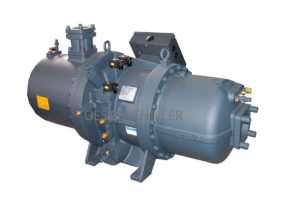
Top Quality Screw Compressor With Certificate
Compressor efficiency is evaluated within the complete selected chiller at stated conditions;
Refrigerant is confirmed by model and destination requirements.
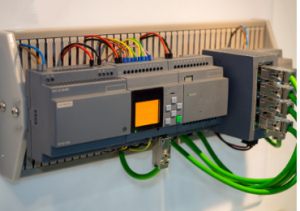
LCD Touch Controller
Automatic Detection of Cold Water Outlet Temperature;
Automatic Detection of Operating Conditions;
Automatically Record the Alarm and Send Trouble Alarm;
Can Realize Remote Control;
Reserve RS-485 Communication Interface, or Ethernet Port;
Customize Display Language: Chinese, English, Russian, Spanish;
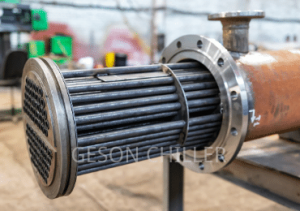
Service life depends on operating conditions, water quality, duty cycle and maintenance;

Applications

Chiller For Plastic Industrial

Beer And Wine Fermentation Chiller

Chemical Processing Chiller

Computer Data Center Chiller

Food And Dairy Chiller

Hotel HVAC Chiller

MRI And Laser Chiller

Pharmaceutical-Formulation-chiller

Swimming-Pool-chiller
How to Size a 20 Ton Chiller
For a steady liquid-cooling duty, calculate heat load from mass flow, specific heat and temperature difference. In SI units, the basic relationship is:
Cooling load (kW) = mass flow (kg/s) × specific heat (kJ/kg·K) × temperature difference (K)
Add documented process heat, pump heat and piping gains, then apply a justified engineering allowance. Do not automatically oversize: excessive capacity can cause short cycling, unstable temperature control and poor part-load operation.
What a 20 Ton Rating Means
Twenty refrigeration tons is approximately 70.3 kW of nominal cooling capacity. A manufacturer selection must still show the net available capacity at the required leaving-fluid temperature and heat-rejection condition. Low-temperature glycol duty and high outdoor ambient temperature commonly reduce available capacity compared with standard water-rating conditions.
Compare COP, EER, kW/ton or part-load metrics only when the rating conditions and equipment boundaries are the same. AHRI 550/590 and 551/591 provide standardized performance-rating methods for eligible factory-made vapor-compression liquid chillers; selections using glycol require correction at the actual concentration and temperatures.
Installation and Controls Checklist
- Verify minimum and maximum evaporator flow and install the required flow proof.
- Confirm buffer volume where load changes or compressor staging could cause rapid cycling.
- Provide strainers, vents, drains, expansion allowance and suitable pump head.
- Maintain air-cooled condenser clearance or water-cooled condenser-water quality and flow.
- Check freeze protection from leaving temperature, fluid concentration and shutdown exposure.
- Confirm voltage, frequency, phase, full-load current, starting method and protection devices.
- Use the manufacturer’s commissioning limits for refrigerant, controls and safety settings.
20 Ton Chiller FAQ
How many kW is a 20 ton chiller?
Twenty refrigeration tons converts to approximately 70.3 kW of heat removal. Actual chiller capacity must be confirmed at the required fluid temperatures, flow, ambient or condenser-water conditions and glycol concentration.
How much does a 20 ton chiller cost?
Price depends on air- or water-cooled configuration, compressor staging, refrigerant, heat exchangers, pump/tank package, controls, electrical supply, certifications, packing and destination. Request a model-specific quotation rather than relying on a generic online range.
Can a 20 ton chiller use glycol?
Yes, when the selected evaporator, materials, pump and controls are designed for the stated glycol type, concentration and temperature. Glycol changes capacity, flow and pressure drop.
What information should I send for selection?
Send the application, calculated load, entering and leaving fluid temperatures, flow, design ambient, fluid and glycol concentration, power supply, operating hours and destination country.
Is an air-cooled 20 ton chiller always less efficient?
No universal comparison applies. Evaluate both complete systems at the project conditions, including air-cooled condenser fans or water-cooled condenser pumps and tower fans.