
GESON Mini Chiller
Specially Developed for Fiber Laser Equipment
Stable And Reliable Performance
Laboratory Testing in Factory
Two-year Free Maintenance
Accurately Compatible With All Brands of Lasers
Our History:
Geson Chiller Has Over 10 Years of Experience in Industrial Water Chiller Manufacturing.
Geson Chiller Has a Professional R&D Engineering Team and a National-level Test Laboratory.
Owned Top-level Advanced Manufacturing Equipment and CNC Machining Center, Computer Numerical Control Punch and Bending Machine, Automatic Welding Machine.
Geson Chiller has been the leading industrial water chiller manufacturers in China.
Our Products:
Geson chiller is focused on Industrial/Commercial Refrigeration Equipment HVACR systems, Supply Industrial Process Cooling Solutions, and Commercial HVAC Solutions.
Capacity from 2 Tons~4000 Tons, and Temperature From -160℃~30℃, Complete Full Product Series
Our Service:
Answer Within 30 Minutes to Respond,
2 Hours to Give A Solution,
48 Hours to Get A Return Call.
Ensure You Get the Best Water Chiller Working Performance.
Main Products
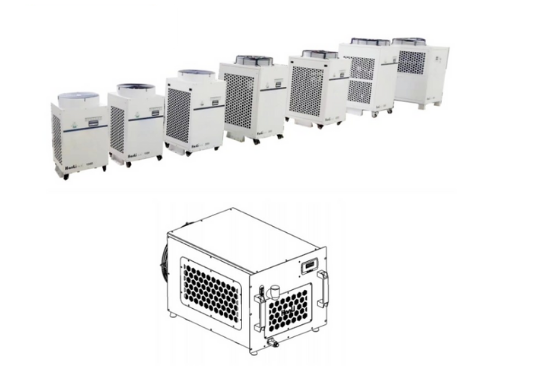
Mini Chiller
200W,3000W,4000W,8000W Cooling Capacity
SMALL SIZE
STRONG COMPATIBILITY
STABLE PERFORMANCE
ENERGY SAVING
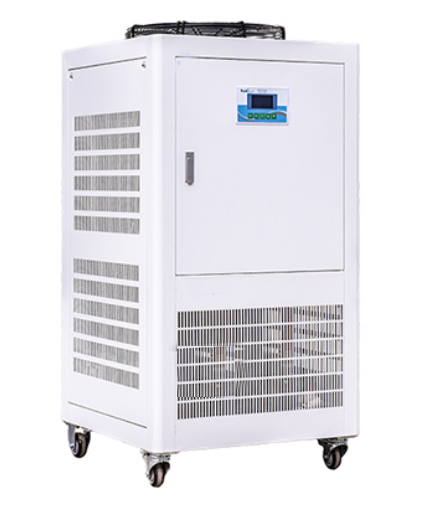
Mini Chiller System
Simulate The Operating Environment Of The Laser Chiller
Strict Inspection
Comprehensive Guarantee Of Quality Stability
High Temperature Test
Low Temperature Test
Stress Test
Vibration Test
| Mini Chiller System
Model |
GS1000MN Mini Chiller |
| Voltage & Frequency | 1p 220V @ 50hz |
| Current | 10.5A |
| Machine power | 2.3kw |
| Application environment | working temperature≯45℃&≯95%RH |
| Tempe. control accuracy | ±1℃ |
| Cooling capacity | 3150w |
| Electric heating power | 650w(Normal Ambient Temp) |
| Refrigerant | R410a |
| Rated flow of water pump | 2m³/h |
| Max.pump lift | 27M |
| Pump power | 0.37kw |
| Tank volume | 13L |
| Laser nozzle interface | φ12mm Quick connector |
| Cutting head nozzle interface | φ10mm Quick connector |
| Machine weight | 55KG |
| Machine size | 580*490*860mm(L*W*H) |
| Packing dimensions | 630*560*950mm(L*W*H) |
|
Functional characteristics |
Efficiency and environmental protection;
Double temperature controls; Flow & over temperature alarm; Thermal protection of compressor; Leakage protection device. |
| Recommended matching | 1kw Continuous fiber laser |
Small Chiller 5~35℃
Precision Chiller 5~35℃
Laser Chiller 5~35℃
Split Chiller 5~35℃
Enhanced Chiller 5~80℃
Application:
* Analytical instruments: electron microscope, spectrometer, mass spectrometer, viscometer, polarimeter, diffractometer.
* Vacuum acquisition and medical treatment: cooling blanket, X-ray machine, nuclear magnetic resonance, accelerator.
* Industrial equipment and others: laser equipment, vacuum coating equipment, biopharmaceuticals, molds, machine tools, vacuum furnaces, welding machines.
Our Manufacturing
Excellence Quality is Our Principle
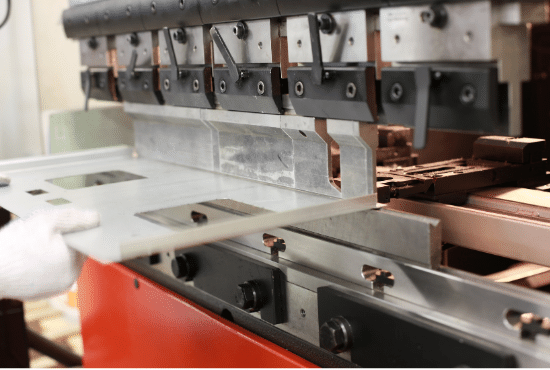
Sheet Metal Bending Machie
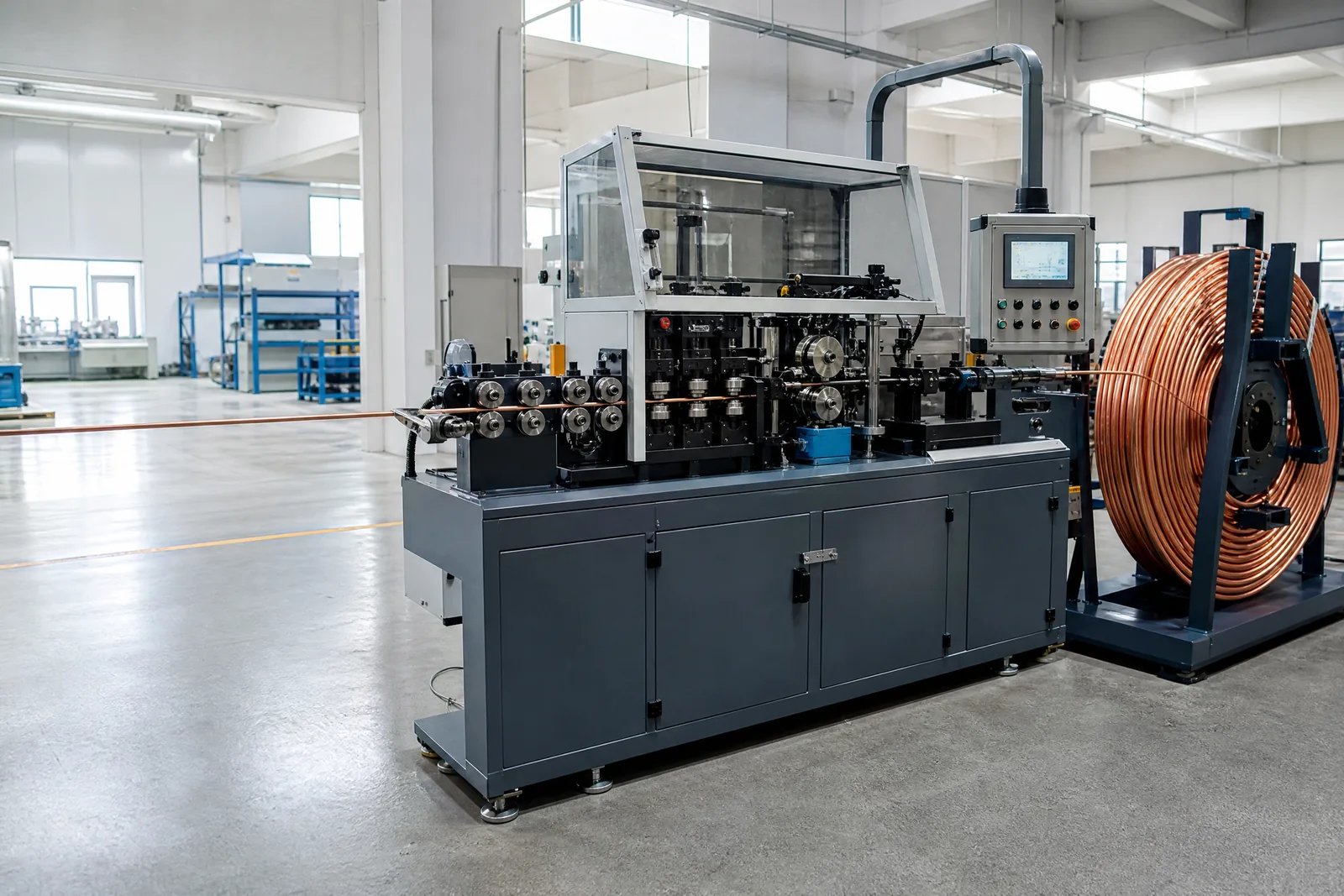
Automatic Copper Pipe Machine

Water Chiller Heat Exchanging Welding
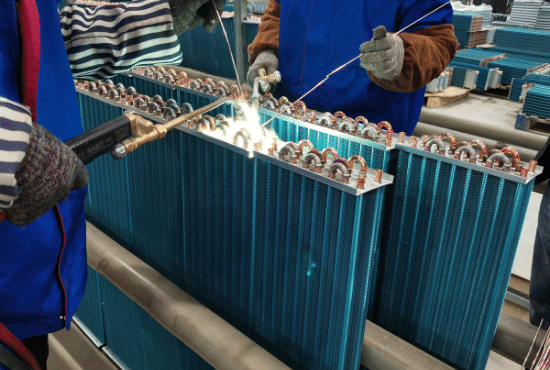
Finned Heat Exchanger Welding
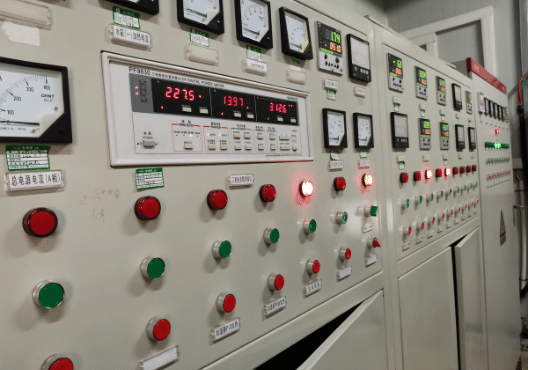
Water Chiller Testing Labritary
Mini Chiller and Small Water Chiller Buyer’s Guide
A mini chiller is a compact refrigeration unit that circulates temperature-controlled water or another approved heat-transfer fluid to equipment or a process. Typical applications include lasers, laboratory instruments, machine tools, imaging equipment, small process loops and other loads that need more stable cooling than once-through tap water or room air can provide.
“Mini” is not a technical capacity standard. The correct unit is selected from actual heat load, required fluid temperature, flow, pressure, ambient condition and installation constraints—not from enclosure size alone.
How a Mini Recirculating Chiller Works
- The process transfers heat into the circulating fluid.
- The pump returns the warm fluid to the chiller.
- The evaporator transfers heat from the process fluid into the refrigerant.
- The compressor raises refrigerant pressure and temperature.
- The condenser rejects the process heat plus chiller input power to room/outdoor air or to facility water.
- The cooled fluid returns to the process at the controlled setpoint.
The process fluid and refrigerant normally remain in separate circuits across the evaporator. They are not mixed. A refrigerated mini chiller also requires electrical power; it is different from a passive liquid-to-air or liquid-to-liquid heat exchanger.
Mini Chiller Selection Checklist
| Input | What to provide | Why it matters |
|---|---|---|
| Heat load | Continuous and peak watts or kW, with calculation method | Determines required cooling capacity at the actual setpoint and ambient |
| Fluid temperature | Supply, return and allowable stability | Capacity falls as the required temperature moves below the rating condition |
| Flow and pressure | Required flow plus equipment pressure-drop or pump curve | Too little flow reduces heat removal; excessive pressure can damage a sensitive fluid path |
| Fluid | Water, approved glycol mixture or another compatible fluid | Changes heat transfer, viscosity, pump duty, materials and freeze protection |
| Ambient and altitude | Minimum/maximum air temperature, elevation and ventilation | Affects air-cooled condenser capacity and heat rejection |
| Electrical supply | Voltage, frequency, phase and plug/connection requirements | Must match the installation and starting-current limits |
| Materials | Corrosion, cleanliness, conductivity and contamination limits | Determines wetted materials, reservoir, filter and water-quality requirements |
| Controls | Alarm contacts, remote start, communications and data logging | Options are model-specific and must match the host equipment |
Thermo Fisher’s recirculating-chiller selection guidance identifies heat load, setpoint temperature, flow rate and pressure loss as core criteria, then adds site and control requirements. Boyd and PolyScience likewise emphasize cooling curves and pump performance rather than nominal capacity alone.
Cooling Capacity Is Not Constant
A “rated cooling capacity” applies at stated conditions. Ask for a performance curve at the required fluid temperature and ambient condition. Check whether the published value includes the selected coolant and whether the pump heat is included.
- Lower fluid setpoints usually reduce available refrigeration capacity.
- Higher ambient temperature can reduce air-cooled condenser capacity.
- Glycol concentration changes specific heat, viscosity and pressure drop.
- Altitude reduces air density and can affect air-cooled heat rejection.
- Long or small tubing increases pressure loss and may reduce delivered flow.
Air-Cooled vs Water-Cooled Mini Chiller
| Factor | Air-cooled condenser | Water-cooled condenser |
|---|---|---|
| Heat destination | Rejects process heat and chiller input into surrounding air | Transfers heat to a facility-water circuit |
| Site needs | Ventilation, air clearance and acceptable room/outdoor temperature | Facility-water temperature, flow, pressure and water-quality limits |
| Installation | Usually needs power and process-fluid connections | Adds condenser-water connections and facility-side coordination |
| Best choice | Depends on total heat released to the room, available facility water, noise, ambient range, water use and lifecycle cost | |
An air-cooled unit does not remove heat from the building—it releases the process heat plus its electrical input into the surrounding air. Confirm that the room HVAC or outdoor installation can handle that heat.
Common Mini Chiller Applications
| Application | Important selection questions |
|---|---|
| Fiber laser or laser source | Heat load by circuit, required flow/pressure, water quality, dual-circuit need and alarm interface |
| Laboratory instrument | Temperature stability, wetted materials, low conductivity, noise and remote monitoring |
| Machine tool or spindle | Oil/water compatibility, load variation, contamination, filtration and ambient range |
| Medical or imaging equipment | OEM-approved coolant, redundancy, alarms, documentation and service boundaries |
| Small process loop | Peak heat, reservoir volume, startup pull-down, glycol and production criticality |
A compact industrial chiller is not automatically an aquarium chiller, beverage cooler or portable room air conditioner. Those products have different safety, materials and performance requirements.
Installation and Maintenance Checks
- Verify electrical and plumbing connections, fluid compatibility and minimum fluid level before startup.
- Provide the condenser clearances and ventilation specified for the selected model.
- Use hose and fittings rated for the temperature, pressure and fluid; avoid restrictions and unsupported hose loads.
- Record baseline supply/return temperature, flow or pressure, ambient and alarms.
- Inspect filters, strainers, reservoir, condenser coil and coolant at the model-specific interval.
- Do not bypass flow, temperature, pressure or level protections.
- Refrigerant and electrical service must be performed by qualified personnel under the applicable safety procedure.
Mini Chiller RFQ Information
- Equipment or process being cooled
- Continuous and peak heat load
- Required supply/return temperature and stability
- Fluid type and concentration
- Required flow and allowable pressure; circuit pressure drop if known
- Ambient range, elevation and installation location
- Electrical supply and controls/communications
- Wetted-material, cleanliness, noise and documentation requirements
- Destination country and applicable standards
Send the application data for model selection and quotation →
Frequently Asked Questions
What is the difference between a mini chiller and a refrigerated circulator?
The names overlap in the market. Compare the actual working-temperature range, cooling curve, pump curve, reservoir, stability, duty cycle and intended application rather than relying on the label.
How do I calculate the required mini chiller capacity?
Use the equipment manufacturer’s heat-rejection value or calculate heat from validated process data. Then select from the cooling-capacity curve at the required fluid and ambient temperatures, with an appropriate engineering margin.
Can I select the pump from flow alone?
No. The pump must deliver the required flow at the total circuit pressure drop. Review the pump curve and the maximum allowable pressure of the cooled equipment.
Should I use water or glycol?
Use the fluid approved by both the chiller and the cooled equipment. Glycol may be required for freeze protection but changes capacity, viscosity and pressure drop. Do not assume every glycol type or concentration is compatible.
Can a mini chiller cool a room?
It is primarily designed to cool a liquid loop or equipment. An air-cooled chiller also rejects heat into its surroundings, so it is not a substitute for properly designed room air conditioning.
Official and Manufacturer Technical References