
Chiller vs Cooling Tower: What’s the Difference?
Chillers and cooling towers are often mentioned together — and for good reason. In a water-cooled chiller system, both are required. But they serve completely different functions. This guide explains what each device does, how they work together, and when you need one, the other, or both.
What is a Chiller?
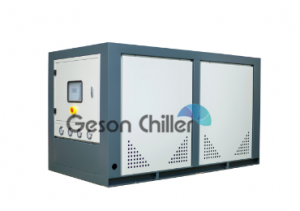
A chiller is a refrigeration machine that removes heat from a process fluid — typically water — using a vapour compression refrigeration cycle. The chiller cools the water to a setpoint temperature (typically 6°C–12°C for HVAC, or lower for process cooling), and this chilled water is distributed to terminal units such as air handling units, fan coil units, or process equipment.
Chillers come in two main types:
- Air-cooled chillers — reject heat directly to the air via condenser fans. No cooling tower required.
- Water-cooled chillers — reject heat to a condenser water circuit, which carries it to a cooling tower.
What is a Cooling Tower?
A cooling tower is a heat rejection device — it removes heat from condenser water and rejects it to the atmosphere through evaporation. It does not cool process water directly and does not contain any refrigeration components. A cooling tower is always used in conjunction with a water-cooled chiller — it cannot replace the chiller.
As warm condenser water (typically 35°C–38°C) passes through the cooling tower, a portion evaporates, removing heat and reducing the water temperature to approximately 29°C–32°C before it returns to the chiller condenser.
Chiller vs Cooling Tower — Key Differences
| Factor | Chiller | Cooling Tower |
|---|---|---|
| Function | Produces chilled water for cooling | Rejects heat from condenser water |
| Uses refrigerant? | Yes — vapour compression cycle | No — evaporation only |
| Output | Chilled water (6°C–12°C) | Cooled condenser water (29°C–32°C) |
| Can work alone? | Yes (air-cooled) / No (water-cooled) | No — needs a chiller to work with |
| Energy consumption | High — compressor driven | Low — fans and pump only |
| Water loss | None (closed loop) | Yes — evaporation losses, makeup required |
| Location | Indoor (water-cooled) or outdoor (air-cooled) | Always outdoor or rooftop |
| Maintenance | Refrigerant, compressor, heat exchangers | Water treatment, fill media, basin cleaning |
How a Chiller and Cooling Tower Work Together
In a water-cooled chiller system, the chiller and cooling tower form two interconnected loops:
Chilled water loop (closed):
- Chiller cools water to setpoint (e.g. 7°C)
- Chilled water pump circulates cold water to AHUs/FCUs
- Water absorbs heat and returns warm (e.g. 12°C) to chiller
Condenser water loop (open):
- Chiller condenser transfers heat to condenser water (e.g. 35°C)
- Condenser water pump sends warm water to cooling tower
- Cooling tower rejects heat — water returns cool (e.g. 30°C) to chiller
Do You Need a Chiller, a Cooling Tower, or Both?
| Your Situation | What You Need |
|---|---|
| Process cooling, no water supply available | Air-cooled chiller only (no cooling tower needed) |
| Large HVAC or industrial cooling, water available | Water-cooled chiller + cooling tower |
| Existing cooling tower, need to add cooling | Water-cooled chiller (connects to existing tower) |
| Sub-zero process temperatures needed | Glycol chiller (air or water cooled) |
| High ambient temperature site (>43°C) | Water-cooled chiller + cooling tower (not affected by ambient) |
Chiller vs Cooling Tower — Efficiency Comparison
A common misconception is that cooling towers are more energy-efficient than chillers. This is misleading — they serve entirely different purposes:
- A chiller consumes significant electrical energy to drive the compressor
- A cooling tower consumes relatively little energy (fans and pump only)
- But a cooling tower cannot replace a chiller — it cannot produce chilled water
The correct comparison is air-cooled chiller vs water-cooled chiller + cooling tower. In that comparison, the water-cooled system is 20–30% more energy efficient because water is a more effective heat transfer medium than air.
Geson Chiller Products
Geson manufactures water-cooled and air-cooled chillers from 3RT to 4,500RT, and can supply complete system packages including the chiller, pumps, and cooling tower.
- Water Cooled Chillers — 30RT to 4,500RT
- Air Cooled Chillers — 3RT to 300RT
- Glycol Refrigeration Systems
Frequently Asked Questions
What is the difference between a chiller and a cooling tower?
A chiller produces chilled water using a refrigeration cycle. A cooling tower rejects heat from condenser water to the atmosphere using evaporation. In a water-cooled chiller system, both are required — they work together but serve different functions.
Can a cooling tower replace a chiller?
No. A cooling tower cannot produce chilled water — it only cools condenser water. A chiller is always required to produce the chilled water needed for air conditioning or process cooling.
Is a cooling tower more efficient than a chiller?
This is not a valid comparison — they perform different functions. A cooling tower uses much less energy than a chiller, but it cannot replace the chiller. The correct efficiency comparison is air-cooled chiller vs water-cooled chiller plus cooling tower — the water-cooled system is 20–30% more efficient.
Do all chillers need a cooling tower?
No. Air-cooled chillers reject heat directly to the air using condenser fans — no cooling tower is needed. Water-cooled chillers always require a cooling tower to reject heat.
What size cooling tower do I need for my chiller?
The cooling tower must be sized to reject the total heat of rejection from the chiller — typically 1.25 to 1.35 times the chiller cooling capacity. Contact Geson for cooling tower sizing recommendations with your chiller specification.